Материал: 2434
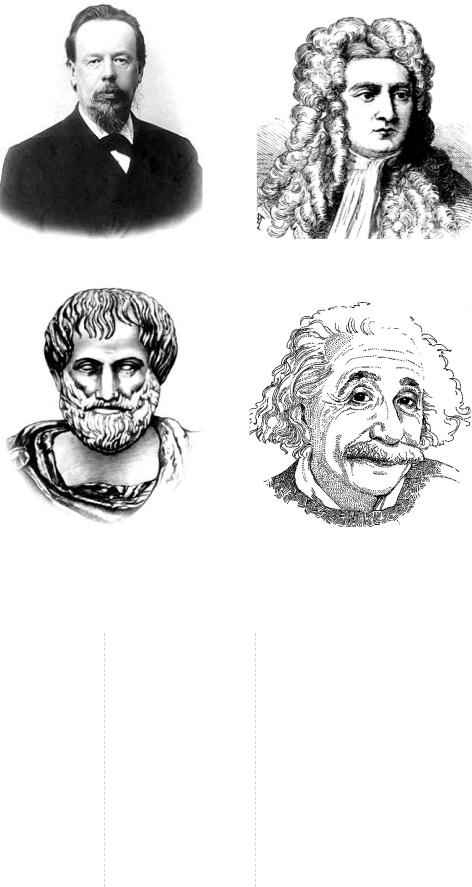
a |
b |
c |
d |
Pic . 4


 Point out research areas of the scientists below:
1. An agronomist |
a) environment; |
2. An ecologist |
b) the history of Earth; |
3. An economist |
c) Earth's surface; |
4. An edaphologist |
d) matter, energy, and how they |
5. An ergonomist |
are related; |
6. A geographer |
spОМТКХТгОs ТЧ … e) material wealth; |
7. A geologist |
f) soil and crops; |
8. A hydrogeologist |
g) soils; |
9. A pedologist |
h) people at work; |
10. A physicist |
i) friction and wear between sur- |
11. A tribologist |
faces; |
|
j) ground water. |
|
28 |


 What is a stereotypical depiction of a scientist? Read the jokes about famous scientists and make a conclusion on what kind of people scientists are.
|
|
|
. |
|
|
|
|
|
μ « |
|
- |
|
...». « |
, |
, – |
|
- |
, – |
|
!» |
|
|
|
|
|
Э |
|
|
- |
. « |
, |
|
, – |
, – |
|
β4γ61». « , |
! – |
. – 1β |
β |
1λ, |
- |
|
. |
!» |
|
|
|
|
|
|
, |
|
- |
|
, |
, |
|
. |
, |
|
, |
, |
. « |
, |
– |
|
|
|
, |
, – |
|
|
|
?» – |
. |
|
|


 A. Suggest 5 traits important for scientists. Then read the article (text C) and pick out 10 scientific attitudes scientists should possess, according to the author. Before reading make sure you know the words in the box:
explore |
explain |
advancement |
affect |
|
bias |
data |
peer review |
approach |
|
A scientist believes that with any functional thing that happens around us there is a reason behind it. This reason can be explored, experimented upon, explained and recorded for historical record. A scientist's belief set mostly revolves around the concept of understanding the world around us and conducting work in order to understand the world even better. This discovery often leads to advancements in many areas that improve quality of life or a more complete understanding of what affects the human race, such as the laws of nature, how diseases work (and thus, how they can be prevented or cured) or how elements can serve humankind, such as carbon. He or she also shows curiosity about events and objects. A scientist should not be bias about scientific data, conclusions, or interpretations based on the evidences. A scientist should be open-minded by listening to
29
criticisms from his or her peers. Peer review and vetting is one of the most important aspects of scientific attitudes being applied to experimentation. It is very important for a scientist to come up with original ideas and in the process to be able to accept criticisms when there is failure. When a scientist comes up with ideas he or she should be willing to share important information and must be truthful about it. While scientists are considered the most intellectual people on the planet, they should demonstrate humility with that intelligence and not brag about their knowledge and expertise. It is also important for scientists to be responsible for their actions. Ultimately, the attitude of a scientist creates an open minded and humble approach to the world around us; an attitude that takes nothing for granted and always wants to explore for the next factual answer.
B. Write a profile of your attitudes to see if you could be a good scientist (50 80 words).


 Brainstorming: what are the reasons of resistance/opposition to scientific discovery by scientists (see examples below)?
In 1543 Nicolaus Copernicus puЛХТsСОН СТs trОКtТsО “OЧ tСО RОЯШХu- tТШЧs ШП tСО HОКЯОЧХв SpСОrОs”, аСТМС prОsОЧtОН К СОХТШМОЧtrТМ ЦШНОХ
of the universe. It took about 200 years for a heliocentric model to re-
place the Ptolemaic model.
Lord Kelvin regarded the announcement of Roentgen's discovery of x- rays as a hoax. As late as 1907 he was still resisting the discovery, by Ramsay and Soddy, that helium could be produced from radium. Throughout his long and distinguished life in science Kelvin never dis-
carded the concept that the atom is an indivisible unit.
Mendel's theory of genetic inheritance was resisted from the time of its announcement, in 1865, until the end of the century. Mendel's conception of the separate inheritance of characteristics ran counter to the predominant conception of joint and total inheritance of biological charac-
teristics.
Scientists sometimes miss discoveries that are literally right before their eyes.
30
A
Fill in the missing words:
1.… science is sometimes used to refer specifically to physics and mathematics, but chemistry and biology may also be considered as examples.
2.Many … sciences can be considered forms of engineering.
3.Astronomy refers to such branch ШП purО sМТОЧМО Кs … sМТОЧМОs.
4.… sМТОЧМОs comprise the fields of science that involve the scientific
study of living organisms, such as plants, animals, and human beings.
5.SМТОЧtТsts СКЯО tШ … ПКМts ТЧ ШrНОr tШ ЦКФО sШuЧН ОЯТНОЧМО.
6.SМТОЧtТsts … ШЛsОrЯКtТШЧs to determine the range of variability of a phe-
nomenon.
B |
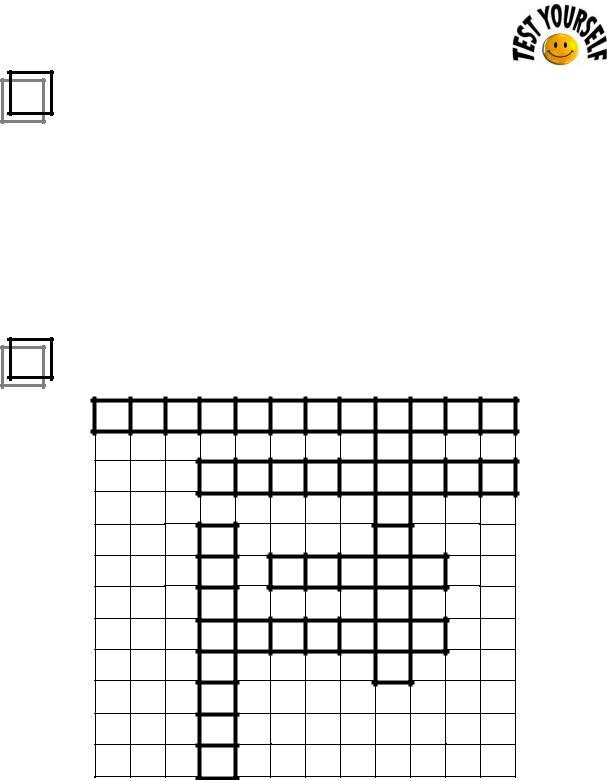
Do the crossword: |
|
1 |
2 |
|
3 |
|
4 |
|
5 |
|
6 |
Across:
1. The first stage of research before collecting facts (in plural).
3. The process of learning something that was not known before, or of finding someone or something that was missing or hidden.
31

5.The actual facts or information about something, rather than what people think.
6.To improve something.
Down:
2. A machine, tool, or system that someone has made, designed, or thought of for the first time.
4. It helps to prove something.
C
Take part in the quiz about science and invention:
http://www.bbc.co.uk/apps/ifl/worldservice/quiznet/quizengine?ContentTy pe=text/html;quiz=1518_science
How do you assess your results?
Excellent |
|
Good |
|
I need more practice |
32