Материал: Oxford American Handbook of Urology ( PDFDrive )
This page intentionally left blank

Chapter 12 |
483 |
|
|
Disorders of erectile function, ejaculation, and seminal vesicles
Physiology of erection and ejaculation 484
Impotence: evaluation 488
Impotence: treatment 490
Retrograde ejaculation 492
Peyronie’s disease 494
Priapism 496

484 CHAPTER 12 Erectile function and ejaculation
Physiology of erection and ejaculation
Innervation
Autonomic
Autonomic sympathetic nerves originating from T11–L2, and parasympathetic nerves originating from S2–4 join to form the pelvic plexus. The cavernosal nerves are branches of pelvic plexus (i.e., parasympathetic) that innervate the penis.
Parasympathetic stimulation causes erection; sympathetic activity causes ejaculation and detumescence (loss of erection).
Somatic
Somatosensory (afferent) information travels via the dorsal penile and pudendal nerves and enters the spinal cord at S2–4. Onuf nucleus (segments S2–4) is the somatic center for efferent (i.e., somatomotor) innervation of the ischiocavernosus and bulbocavernosus muscles of the penis.
Central
The medial preoptic area (MPOA) and paraventricular nucleus (PVN) in the hypothalamus are important centers for sexual function and penile erection.
Mechanism of erection
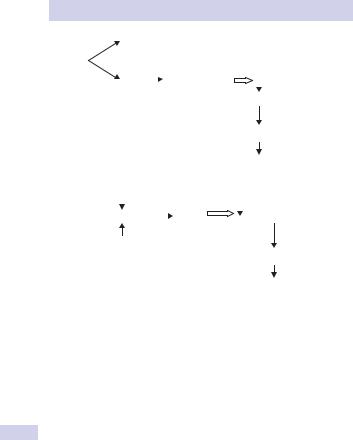
Neuroendocrine signals from the brain, created by audiovisual or tactile stimuli, activate the autonomic nuclei of the spinal erection center (T11–L2 and S2–4). Signals are relayed via the cavernosal nerve to the erectile tissue of the corpora cavernosa, where nitric oxide (the principle neurotransmitter for penile erection) is released from nonadrenergic, noncholinergic (NANC) nerve terminals and from endothelium in the penis.
Cyclic GMP is then secondarily released via guanlyl cyclase, lowering intracellular calcium concentration within the endothelial cells, causing smooth muscle relaxation and increased arterial blood flow into the cavernosal sinuses of the penis.
A veno-occlusive mechanism (Table 12.1) is created by expansion of the sinusoidal spaces against the tunica albuginea, which compresses the subtunical venous plexuses, decreasing venous outflow and thus allowing “trapping” of blood within the erect penis. Maximal stretching of the tunica albuginea acts to compress the emissary veins that lie within its inner circular and outer longitudinal layers, reducing venous flow even further. Rising intracavernosal pressure and contraction of the ischiocavernosus muscles produces a rigid erection.
Following orgasm and ejaculation, vasoconstriction due to increased sympathetic activity and breakdown of cGMP via phophodiesterase type 5 produces detumescence (Figs. 12.1 and 12.2).
Ejaculation
Tactile stimulation of the penis causes sensory information to travel (via the pudendal nerve) to the lumbar spinal sympathetic nuclei. Sympathetic efferent signals (traveling in the hypogastric nerve) cause contraction of smooth muscle of the epididymis, vas deferens, and secretory glands, propelling spermatozoa and glandular secretions into the prostatic urethra.
PHYSIOLOGY OF ERECTION AND EJACULATION 485
There is simultaneous closure of the internal urethral sphincter and relaxation of the extrinsic sphincter, directing sperm into the bulbourethra (emission), but preventing sperm from entering the bladder. Rhythmic contraction of the bulbocavernosus muscle (somatomotor innervation) leads to the pulsatile emission of the ejaculate from the urethra.
During ejaculation, the alkaline prostatic secretion is discharged first, followed by spermatozoa and, finally, seminal vesicle secretions (ejaculate volume 2–5 mL). Ejaculatory latency of less than 2 minutes suggests a diagnosis of premature ejaculation.
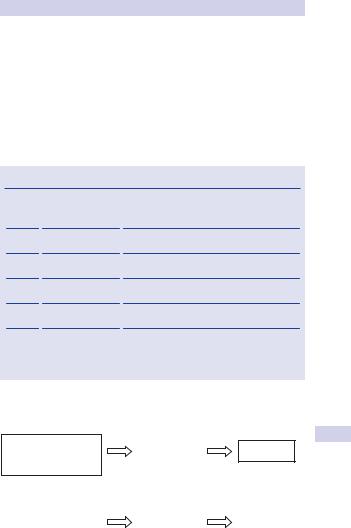
Table 12.1 Phases of erectile process
Phase |
Term |
Description |
0 |
Flaccid phase |
Cavernosal smooth muscle contracted; |
|
|
sinusoids empty; minimal arterial flow |
1 |
Latent (filling) |
Increased pudendal artery flow; penile |
|
phase |
elongation |
2 |
Tumescent phase |
Rising intracavernosal pressure; erection |
|
|
forming |
3 |
Full erection |
Increased cavernosal pressure causes penis |
|
phase |
to become fully erect |
4 |
Rigid erection |
Further increases in pressure + |
|
phase |
ischiocavernosal muscle contraction |
5 |
Detumescence |
Following ejaculation, sympathetic discharge |
|
phase |
resumes; there is smooth muscle contraction |
|
|
and vasoconstriction; reduced arterial flow; |
|
|
blood is expelled from sinusoidal spaces |
|
|
|
Cavernosal smooth muscle
Nitric oxide (NO)
Vasoactive intestinal peptide Decrease in calcium RELAXATION (erection)
(VIP)
Prostaglandin E1 (PGE1)
Noradrenaline (NA) |
|
|
|
Increase in calcium |
CONTRACTION |
||
Endothelin-1 |
|||
(flaccidity) |
|||
Prostaglandin F2 (PGF2) |
|
||
|
|
||
|
|
Figure 12.1 Factors influencing cavernosal smooth muscle.
486 CHAPTER 12 Erectile function and ejaculation
|
L-citrulline |
|
|
||
L-arginine |
|
|
|
GTP |
|
|
|
|
|
|
|
NOS |
NO |
|
|
Guanylate cyclase |
PDE5 |
|
|||||
|
|
|
|
|
|
cGMP  5GMP
Cavernosal smooth muscle relaxation
ERECTION
VIP + PGE1
ATP |
|
|
cAMP |
|
Intracellular Ca2+ |
|
|
|
|||
|
|||||
|
|
|
Adenylate cyclase
Cavernosal smooth muscle relaxation
ERECTION
Figure 12.2 Secondary messenger pathways involved in erection.