Материал: The_Future_of_Hydrogen-IEA-2020
The Future of Hydrogen |
Chapter 4: Present and potential industrial uses of hydrogen |
Second, differentiated markets must be established to support the increased costs faced by steel producers introducing renewable hydrogen into their operations. This should extend to hydrogen blending with natural gas in the short term, as this can help scale up electrolysis and dedicated renewables installations, but should move towards sole support for the 100% hydrogen-based route once it has reached commercial-scale demonstration. For example, public procurement contracts could be modified to require contractors for a public building or infrastructure project to use a gradually rising share of “green steel”. This could help kickstart the demand for an initially more costly product. Steel producers will have limited capacity to absorb these costs themselves, owing to the relatively slim margins on this widely traded bulk commodity. Beyond this, there are several market sectors and end-use products where consumers, especially in industrialised economies, could absorb slightly higher costs, such as a 1% increase in the price of a car (ETC, 2018).
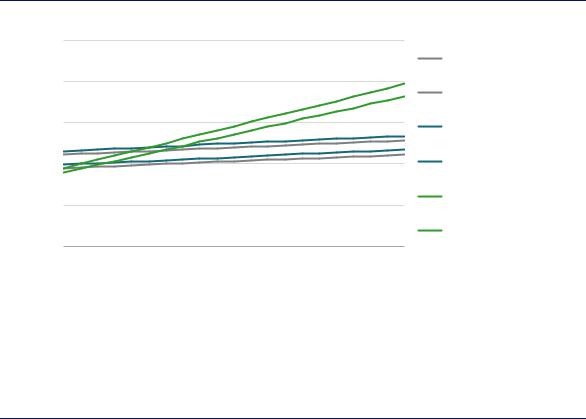
Figure 47.
(USD/t) |
1 000 |
|
|
cost |
800 |
Levelised |
600 |
|
400
200
0
0
Comparison of cleaner routes for steel production in the long term
NG DRI-EAF (high)
NG DRI-EAF (low)
NG DRI-EAF w/CCUS (high)
NG DRI-EAF w/CCUS (low)
Hydrogen DRI-EAF (high)
Hydrogen DRI-EAF (low)
10 |
20 |
30 |
40 |
50 |
60 |
70 |
80 |
90 |
100 |
Electricity cost (USD/MWh)
Notes: The levelised cost includes the cost of CAPEX on core process equipment, fixed OPEX, fuel and feedstock costs, and the cost of capturing, transporting and storing CO2. Best practice energy performance is assumed for natural gas-based routes. Electrolyser CAPEX range = USD 455–894/kWe. Electrolyser efficiency range = 64–74% on an LHV basis. 95% DRI charge to the EAF is assumed in all cases. More information on the assumptions is available at www.iea.org/hydrogen2019.
Source: IEA 2019. All rights reserved.
Electrolytic hydrogen-based routes start to compete with their natural gas-based counterpart equipped with CCUS at electricity prices of USD 5–35/MWh.
Hydrogen for high-temperature heat
Industrial high-temperature heat is a potential source of hydrogen demand growth in the future, but virtually no dedicated hydrogen is produced for this application today. Industry uses heat for a variety of different purposes, including melting, gasifying, drying, and mobilising a wide array of chemical reactions. Heat can be used both directly, for example in a furnace, or indirectly, for example by first raising steam and then transferring it for heating needs. There are three main temperature ranges for industrial heat: low temperature (< 100°C), medium temperature (100–400°C) and high temperature (> 400°C).
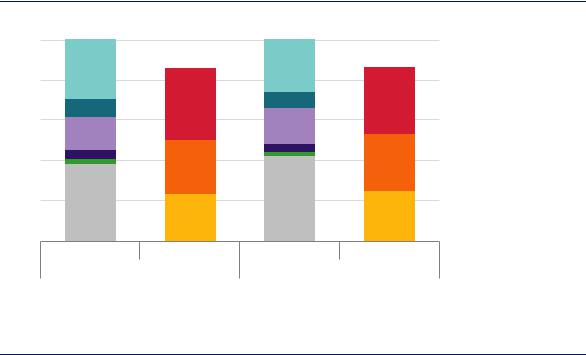
Global demand for high-temperature heat in industry was around 1 280 Mtoe/yr in 2018, of which just 370 Mtoe/yr was outside the chemical and iron and steel sectors covered in the
PAGE | 116
IEA. All rights reserved.
The Future of Hydrogen |
Chapter 4: Present and potential industrial uses of hydrogen |
previous sections (Figure 48). More than half of this remainder was consumed in cement manufacture (IEA and CSI, 2018). This level of demand is set to rise gradually on current trends to just over 400 Mtoe/yr in 2030. This demand trajectory would not change significantly even if strong climate change mitigation measures were pursued, although some small differences would arise from increases in energy and materials efficiency.
Figure 48. Demand for heat in industry under current trends
100%
80%
60%
40%
20%
0%
Sector |
Temperature |
Sector |
Temperature |
|
2018 |
|
2030 |
Source: IEA 2019. All rights reserved.
High, excl. steel/chemicals  Remaining high (> 400°C)
 Medium (100–400°C)
 Low (< 100°C)
 Iron and steel
 Cement
 Chemicals
 Paper
 Aluminium
 Other industry
Nearly 30% of high-temperature heat in industry is consumed outside chemical and iron and steel sectors, with this share remaining relatively constant on current trends.
Fossil fuels are the primary source of high-temperature heat today (around 65% from coal, 20% natural gas and 10% from oil), although small amounts of biomass and waste are used in certain sectors. Electricity is also used extensively to generate high-temperature heat in specific applications, either directly (e.g. electric arc and induction furnaces in the steel industry) or indirectly (e.g. to drive electro-chemical reactions in aluminium smelting). Resistance heaters are used in the production of carbon fibre, reaching temperatures of 1 800°C, and there are ways to utilise electromagnetic heating technologies (e.g. microwave and infrared) to achieve similar temperatures for other specific heating applications (Beyond Zero Emissions, 2018). However, several large-scale processes, such as steam crackers and cement kilns, remain challenging to electrify although demonstration and feasibility studies are being conducted in both of these areas (BASF, 2019; Cementa, 2019).
Economics of hydrogen-based high-temperature heat
Excluding the chemical and iron and steel sectors, industrial high-temperature heat is responsible for approximately 1.1 GtCO2/yr of direct emissions today, or around 3% of global energy-sector CO2 emissions. Combustion of sustainable bioenergy or hydrogen (or direct use of hydrogen-
PAGE | 117
IEA. All rights reserved.
The Future of Hydrogen |
Chapter 4: Present and potential industrial uses of hydrogen |
based fuels such as ammonia) offer ways of reducing emissions that are proven at scale. However, negligible quantities of hydrogen are currently used for this purpose today.39
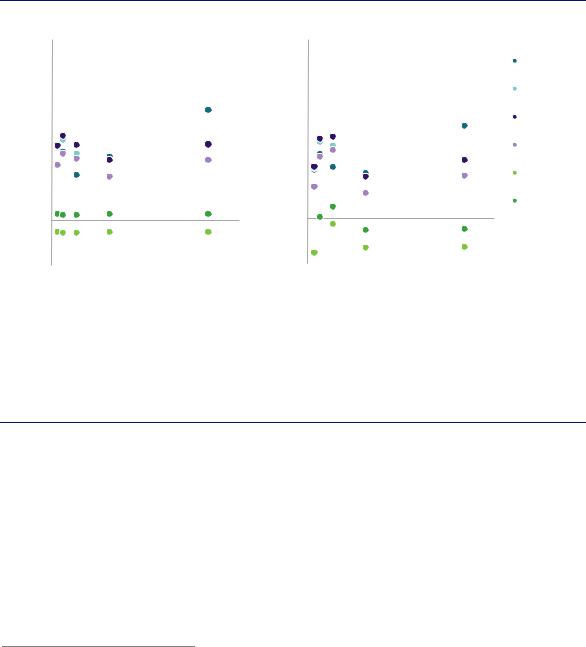
Despite having the potential to eliminate emissions from high-temperature heat for industry, hydrogen remains an expensive alternative to fossil fuels in the context of a low-carbon pathway for the energy system, even when CO2 prices reach USD 100/tCO2 (Figure 49). Bioenergy tends to be more cost-competitive in this context, assuming a bioenergy price range of USD 8–12/GJ in 2030. In all regions explored in Figure 49, bioenergy is cheaper than the hydrogen-based fuels and thus shows a smaller differential relative to coal and natural gas prices.
Figure 49. Economics and future potential in the context of a USD 100/tCO2 carbon price
Coal price differential in 2030 (USD/GJ)
40 |
|
|
|
|
2030 (USD/GJ) |
30 |
Brazil |
States |
|
China |
|
20 |
Japan |
United |
India |
|
differentialin |
|
|
|
|
|
|
10 |
|
|
|
|
Gas price |
0 |
|
|
|
|
|
|
|
|
|
|
|
|
0 |
|
50 |
100 |
150 |
40 |
|
|
30 |
|
|
20 |
Brazil |
|
Japan |
||
|
||
10 |
|
0
0
India
United States
50
|
|
H2 |
|
China |
LOHC |
|
NH3 (H2) |
|
|
|
|
|
|
NH3 |
|
|
Bioenergy |
|
|
(USD 8/GJ) |
|
|
Bioenergy |
|
|
(USD 12/GJ) |
100 |
|
150 |
- 10 High-temp. heat demand in 2030 (Mtoe/yr) |
- 10 High-temp. heat demand in 2030 (Mtoe/yr) |
Notes: LOHC = liquid organic hydrogen carrier; NH3 (H2) = hydrogen transported as ammonia and then converted back to hydrogen; NH3 = ammonia transported and combusted as ammonia. High-temperature heat demand refers to non-chemical/iron and steel sector heat demand > 400°C. The regional price differentials are calculated using the cheapest source of each hydrogen-based fuel available (whether imported or domestically produced) and the domestic prices of coal and gas. More information on the assumptions is available at www.iea.org/hydrogen2019.
Source: IEA 2019. All rights reserved.
In key regions for high-temperature heat demand in 2030, low-carbon hydrogen-based fuels are likely to be a significantly more expensive alternative to fossil fuels than bioenergy
Bioenergy is set to become cost-competitive with natural gas as a source of high-temperature heat in 2030 in India, China and Japan, even at the higher end of the bioenergy price range explored (USD 12/GJ). This is due to relatively high natural gas prices in these regions in the context of a Paris-compatible pathway for the energy system (USD 3.8–10.6/MBtu). A CO2 price of around USD 200/tCO2 would be needed before the cheapest hydrogen-based fuels (at a delivered cost of USD 2.3–2.7/kgH2) become competitive with coal and natural gas.
Hydrogen does, however, offer some advantages for decarbonising elements of this diverse segment of energy demand, despite its relatively high costs and the need for it to overcome
39 This excludes the hydrogen portions of fuel gas that are recirculated for combustion (e.g. coke oven gas, by-product gas from steam cracking). The utilisation of these by-product gases is not relevant to the scope of this analysis, because they are not likely to represent growth areas for low-carbon hydrogen production in the future.
PAGE | 118
IEA. All rights reserved.

The Future of Hydrogen |
Chapter 4: Present and potential industrial uses of hydrogen |
certain practical difficulties (Box 11). For example, low-carbon hydrogen has the potential to help decarbonise the more geographically fragmented portions of industrial high-temperature heat demand where direct application of CCUS may prove impractical. Hydrogen, either via pipeline or using small-scale on-site electrolysis, could form a low-carbon energy supply to these “hard-to-reach” segments of industry. Its potential role may also grow if the supply of sustainable bioenergy is limited in the future; bioenergy is also likely to be in demand in other end-use sectors such as aviation.
Box 11. General challenges facing the use of hydrogen for heat in industry
Pure hydrogen cannot simply replace coal or natural gas in many industry sectors, owing to the diversity and specific nature of the energy conversion devices (such as kilns, furnaces, boilers, reactors) that those sectors use. In the cement industry, for example, several factors would require changes to equipment and practices, adding to the total costs of conversion:
Hydrogen has a high combustion velocity relative to carbon-containing fuels, and a nonluminous flame, which makes it difficult to monitor optically. These challenges can be partially overcome by using hydrogen/ammonia mixes, as ammonia burns at a much
lower velocity and with a visible flame, also helping to reduce (nitrogen oxide) NOx emissions (Li et al., 2014).
Hydrogen flames achieve relatively low radiation heat transfer compared to other fuels, requiring other (carbon-free) media (such as clinker dust) to be introduced into the fuel stream (Hoenig, Hoppe and Emberger, 2007).
Current burners may need to be redesigned to deal with any new media being introduced (for example, to cope with the abrasive properties of clinker dust).
Hydrogen causes corrosion and brittleness when it comes into contact with some metals, requiring new coatings and other protective measures.
Intermittent sources of hydrogen could present difficulties for high-temperature heat users operating “on-demand” processes, and potentially require costly on-site storage, although other high-temperature heat users could be remunerated for flexibility and the enabling of ancillary grid services.
Handling and storing hydrogen on site presents additional difficulties compared with traditional fuels, due to its explosive properties. While many industrial operators are experienced at handling hazardous substances, it may be safer to store hydrogen in other forms, such as ammonia (Hoenig, Hoppe and Emberger, 2007).
Sources: Hoenig, Hoppe and Emberger (2007), “Carbon capture technology – options and potentials for the cement industry”; Li et al. (2014), “Study on using hydrogen and ammonia as fuels: Combustion characteristics and NOx formation”, International Journal of Energy Research.
PAGE | 119
IEA. All rights reserved.
The Future of Hydrogen |
Chapter 4: Present and potential industrial uses of hydrogen |
References
Al Reyadah (2017), “Review of project proposed for CSLF Recognition: Al Reyadah CCUS Project (Phase I: Emirates Steel)” (presentation), www.cslforum.org/cslf/sites/default/files/documents/AbuDhabi2017/AbuDhabi17-TW-Sakaria- Session2.pdf.
Allwood, J. and J. Cullen (2012), Sustainable Materials with Both Eyes Open, UIT Cambridge.
BASF (2019), “Innovations for a climate-friendly chemical production”, www.basf.com/global/en/media/news-releases/2019/01/p-19-103.html.
Beyond Zero Emissions (2018), Zero Carbon Industry Plan Electrifying Industry, https://bze.org.au/wp- content/uploads/electrifying-industry-bze-report-2018.pdf.
BioMCN (2019), “BioMCN produces methanol and bio-methanol”, www.biomcn.eu/our-product/.
Boston Metal (2019), “We transform dirt to metal very efficiently”, https://www.bostonmetal.com/moetechnology/.
Brown, T. (2019), “Ammonia plant revamp to decarbonize: Yara Sluiskil”, https://ammoniaindustry.com/ammonia-plant-revamp-to-decarbonize-yara-sluiskil/.
CARB (California Air Resources Board) (2019a), “Low Carbon Fuel Standard Regulation approved by the Office of Administrative Law (OAL) on January 4, 2019”, www.arb.ca.gov/fuels/lcfs/fro_oal_approved_clean_unofficial_010919.pdf.
CARB (2019b), “LCFS pathway certified carbon intensities”, www.arb.ca.gov/fuels/lcfs/fuelpathways/pathwaytable.htm.
Cementa (2019), CemZero – För en klimatneutral cementtillverkning, www.cementa.se/sv/cemzero.
Chevrier V. (2018), “Hydrogen uses in iron making” (presentation), Midrex Technologies, www.energy.gov/sites/prod/files/2018/08/f54/fcto-h2-scale-kickoff-2018-8-chevrier.pdf.
CIEP (Clingendael International Energy Programme) (2018), Refinery 2050: Refining the Clean Molecule, CIEP, The Hague.
COURSE 50 (2019), “CO2 ultimate reduction in steelmaking process by innovative technology for cool Earth 50”, www.jisf.or.jp/course50/research/index_en.html.
Energy Transitions Commission (ETC) (2018), Mission Possible: Reaching Net-Zero Carbon Emissions from Harder-to-Abate Sectors by Mid-Century, www.energytransitions.org/sites/default/files/ETC_MissionPossible_FullReport.pdf.
Enerkem (2019), “Enerkem enables the chemical industry to achieve sustainability by recycling carbon from garbage”, https://enerkem.com/biofuels-and-green-chemicals/renewable-chemicals/.
ENGIE (2019), “ENGIE and YARA take green hydrogen into the factory”, www.engie.com/en/news/yara- green-hydrogen-factory.
ET Energy World (2018), “Task force to study feasibility of making methanol from coal”, The Economic Times, https://energy.economictimes.indiatimes.com/news/coal/task-force-to-study-feasibility-of- making-methanol-from-coal/62417181.
Remus, R. et al. (2000), Best Available Techniques (BAT) Reference Document on the Production of Iron and Steel, Joint Research Centre, European Commission, Brussels.
Fraunhofer IMWS (2018), “Fraunhofer IMWS and OCP Group sign memorandum of understanding”, Fraunhofer Institute for Microstructure of Materials and Systems,
PAGE | 120
IEA. All rights reserved.