Материал: The_Future_of_Hydrogen-IEA-2020

The Future of Hydrogen |
Chapter 6: Policies to boost momentum in key value chains |
Chapter 6: Policies to boost momentum in key value chains
•Hydrogen is already widely used in some industries, but it has not yet realised its potential to support clean energy transitions. Hydrogen can be produced from many sources and it could play a very important and versatile part in a clean energy future. There have been numerous successful government-backed projects in recent years; now it is time for policy to help stimulate commercial demand for cleaner hydrogen and for proponents to demonstrate they can build on the current unprecedented momentum.
•Ambitious, pragmatic and near-term action is needed to further overcome barriers and reduce costs. The 2030 time horizon will be crucial for the wider deployment of hydrogen in the longer term. There is scope to build on hydrogen’s current uses by scaling up low-carbon production and fostering innovation. In parallel, demand for hydrogen in new sectors and applications can be created and markets connected.
•Five smart policy actions are needed to 2030: (1) establish long-term signals to foster investor confidence; (2) stimulate commercial demand for hydrogen in multiple applications;
(3) help mitigate salient risks, such as value chain complexity; (4) promote R&D and knowledge sharing; and (5) harmonise standards and remove barriers.
•Four value chains offer springboard opportunities to scale up hydrogen supply and demand, building on existing industries, infrastructure and policies:
•Make industrial clusters the nerve centres for scaling up the use of clean hydrogen.
Growing hydrogen demand in major industries offers the opportunity to create hubs that bring down the cost of low-carbon hydrogen pathways and kick-start new sources of demand. Coastal industrial clusters, co-located near ports, are particularly attractive,
•Use existing gas infrastructure to help boost low-carbon hydrogen supply and make the most of a reliable source of demand. Even 5% blending would create large new hydrogen demand; 100% hydrogen enables deep emissions reduction for the long term.
•Give focused support to those transport options where hydrogen has most to offer. This could make fuel cell vehicles more competitive and promote the development of core infrastructure. Existing 2030 government targets require 2.5 million fuel cell vehicles on the road and 4 000 refuelling stations. Such a scale-up could reduce fuel cell costs by 75%.
•Kick-start the first international shipping routes for hydrogen trade. Lessons from the successful growth of the global LNG market can be leveraged. International hydrogen trade needs to start soon if it is to make an impact on the global energy system.
PAGE | 167
IEA. All rights reserved.
The Future of Hydrogen |
Chapter 6: Policies to boost momentum in key value chains |
The chapters in this report highlight a wide range of ways in which hydrogen can be produced, distributed and used as part of a changing energy system. Each application of hydrogen could play an important role in supporting clean energy transitions, but also faces significant challenges and competition.
This chapter synthesises and summarises the analysis set out in previous chapters. It identifies the next decade as a critical opportunity for scaling up hydrogen technologies and supply chains so that they can fulfil their potential. It then charts the steps that governments, companies and others can take in the near term and in different policy contexts around the world. It identifies particular near-term opportunities for deployment in four complementary value chains, and reviews what policymakers need to do to support them. Governments have a central role to play in setting the overarching long-term policy framework for investment, establishing consensus around national opportunities for hydrogen, and also creating market demand, removing regulatory barriers, directing research and engaging internationally. The chapter concludes with a list of priority next steps.
Key findings from IEA analysis
Hydrogen is already in use in a number of important sectors. Demand for hydrogen in its pure form is estimated to stand at around 74 MtH2/yr, and industry has already demonstrated that it can be produced, stored and distributed on a large scale. Indeed, as much as 6% of natural gas demand is directed to hydrogen production today, mostly for refining and chemicals manufacture.
Almost all hydrogen for industrial use is currently produced using unabated fossil fuels, and demand for cleaner hydrogen remains limited despite previous waves of interest in this topic. However, good reasons are emerging to conclude that this is changing. There is now a greater focus on the deep emission reductions that hydrogen can help deliver, a wider recognition that hydrogen can help to achieve a broad range of policy objectives, a growing awareness that hydrogen can complement expected high levels of renewables in various important ways, and a growing body of experience with low-carbon technologies across the board on which governments and investors alike can draw.
Overall, hydrogen’s potential is split between:
•Existing applications of hydrogen, where opportunities are available to use hydrogen produced using cleaner production methods and to make use of a more diverse set of energy sources.
•A wide range of potential new applications for hydrogen, as an alternative to current fuels and inputs, or as a complement to the greater use of electricity in these applications. In these cases – for example in transport, heat, iron and steel and electricity
– hydrogen can be used in its pure form, or converted to hydrogen-based fuels.
The number of countries with polices that directly support investment in hydrogen technologies is increasing, with a rising focus on the first of these two types of contribution, but with support for new applications such as road transport as well. Governments have a critical role to play and are working with an increasingly strong and diverse stakeholder community to address key challenges, including: high costs; policy and technology uncertainty; value chain complexity and infrastructure requirements; regulations and standards; and public acceptance. Tackling these challenges is not optional if hydrogen is to get more than a toehold in the broader energy system.
PAGE | 168
IEA. All rights reserved.

The Future of Hydrogen |
Chapter 6: Policies to boost momentum in key value chains |
The wide range of applications for hydrogen varies in long-term potential and near-term opportunity
The potential applications for hydrogen reviewed in this report cover almost all facets of energy demand in the modern economy. They are not all equal in their scale, maturity or potential contribution to deep emission reductions in their sectors. Targets and existing and planned projects around the world show that the speed of deployment in coming years is expected to vary widely between sectors. Some, such as aviation, shipping, iron and steel and chemicals, have very high levels of potential future demand for hydrogen and hydrogen-based fuels and face few competitors from other low-carbon technologies. The likely lead times mean that there is a critical need to accelerate development in the near term in order to meet long-term climate objectives, but the opportunity for deployment by 2030 is limited (Table 10). Other sectors offer opportunities for more rapid near-term deployment. Realising specific near-term opportunities for hydrogen at scale will help to boost low-carbon technologies generally, for example through the application of CCUS to refinery hydrogen production and the development of business models for the operation of electrolysers and hydrogen storage in ways that benefit the power grid.
Table 10. Applications for low-carbon hydrogen classified by the theoretical size of the 2030 opportunity and the long-term potential
|
Type of |
|
|
Application |
|
Size of the 2030 |
|
Long-term |
|
||
|
application |
|
|
|
opportunity (ktH2/yr) |
|
potential scale |
|
|||
|
|
|
|
|
|
|
|||||
|
|
|
|
|
|
|
|
|
|
|
|
|
|
usestoday |
|
|
|
Chemicals |
|
Over 100 |
|
High |
|
|
Major hydrogen |
|
|
|
(ammonia and methanol) |
|
|
|
|||
|
|
|
|
|
|
|
|
|
|||
|
|
|
|
Iron and steel |
|
|
|
|
|
||
|
|
|
|
|
|
Oil refineries and biofuels |
|
Over 100 |
|
Medium |
|
|
|
|
|
|
|
(blending in DRI) |
|
10-100 |
|
Low |
|
|
|
|
|
|
|
|
|
|
|
|
|
|
system |
|
|
Buildings |
|
Over 100 |
|
High |
|||
|
|
|
(conversion to 100% hydrogen) |
|
|
||||||
|
|
|
|
|
|
|
|
||||
|
|
|
|
|
|
|
|
|
|
|
|
|
energy |
|
|
Road freight |
|
Over 100 |
|
High |
|
||
|
|
|
|
|
|
|
|
|
|||
|
|
|
Passenger vehicles |
|
Over 100 |
|
Medium |
||||
|
|
|
|
|
|
|
|
||||
|
clean |
|
|
|
|
|
|
|
|
||
|
|
|
Buildings |
|
Over 100 |
|
Low |
|
|||
|
|
|
(blending in the gas grid) |
|
|
|
|||||
|
|
|
|
|
|
|
|
||||
|
a |
|
|
Iron and steel |
|
|
|
|
|
||
|
for |
|
|
10-100 |
|
High |
|||||
|
|
|
(conversion to 100% hydrogen) |
|
|||||||
|
uses |
|
|
|
|
|
|
|
|||
|
|
|
Aviation and maritime transport |
|
Under 10 |
|
High |
|
|||
|
hydrogen |
|
|
|
|
|
|||||
|
|
|
|
|
|
|
|
|
|||
|
|
|
Electricity storage |
|
Under 10 |
|
High |
||||
|
|
|
|
|
|
|
|
||||
|
|
|
|
|
|
|
|
|
|
|
|
|
New |
|
|
Flexible and back-up power generation |
|
Under 10 |
|
Medium |
|
||
|
|
|
|
|
|
|
|
|
|||
|
|
|
Industrial high-temperature heat |
|
Under 10 |
|
Low |
||||
|
|
|
|
|
|
|
|
||||
|
|
|
|
|
|
|
|
|
|
|
|
Notes: Long-term potential scale is a judgement of the technical potential and the extent to which hydrogen faces competition from other low-carbon options in this application. The size of the 2030 opportunity reflects announced plans and targets for scale-up of clean hydrogen in these applications around the world.
Source: IEA 2019, all rights reserved.
Based on current plans, low-carbon hydrogen demand could pass 100 ktH2/yr in existing industrial applications and gas grids by 2030; iron and steel, aviation and shipping have longer-term potential.
PAGE | 169
IEA. All rights reserved.
The Future of Hydrogen |
Chapter 6: Policies to boost momentum in key value chains |
These differences between the applications can be used strategically to support a carefully thought through step-by-step approach to building hydrogen supply chains, experience and infrastructure. Near-term investments in one sector or application can benefit and trigger longterm deployment in other related sectors.
Hydrogen is a relatively expensive fuel and a feedstock that can be used for climate change mitigation in most, but not all, energy applications today. Low-carbon hydrogen production costs are generally lowest from natural gas combined with CCUS: they are as low as USD 1.5/kgH2 today in the Middle East and North America, and this method of production looks set to remain a low-cost hydrogen production pathway through to 2030. Where CCUS is not a preferred or feasible option, electrolytic hydrogen is not much more expensive in some cases, but is cheapest when produced at high full load hours and not in response to relatively infrequent low prices for renewable power. In the People’s Republic of China (“China”) and some other countries electrolytic hydrogen can be produced for USD 3–6/kgH2 in most locations
– and this cost could potentially fall to USD 2–5/kgH2 by 2030. Due to significant differences in low-carbon electricity costs and the attractiveness of CCUS between regions, opportunities exist for international hydrogen trade, which would add around USD 1.5–2.5/kgH2 to delivered hydrogen costs, depending on the end use. This is equivalent to an electricity price differential of USD 31–52/MWh in the case of electrolytic hydrogen.
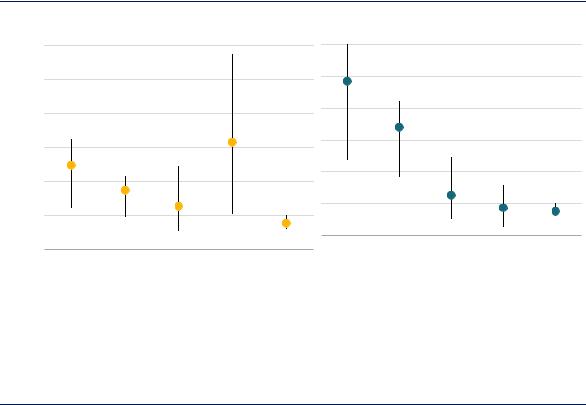
In the transport sector today consumers already pay prices for energy (including taxes) that are comparable to low-carbon hydrogen supply costs (Figure 65). For early deployment, this indicates that the cost gap may not be large and could be bridged in part by governments, for example with time-limited tax exemptions for first movers. In other sectors, such as refining and industry, there is potential to bridge part of the cost gap by marketing a version of existing industrial products with a lower CO2 intensity. A market for lower-carbon industrial products could be created by consumer demand or policy intervention, and would help reduce the direct costs to taxpayers of low-carbon hydrogen projects in these sectors.
Figure 65. Today’s fuel prices in hydrogen-equivalent terms on an energy basis (left) and accounting for the relative efficiencies to provide the same service (right)
equivalent |
12 |
|
|
|
|
|
|
|
|
|
10 |
|
|
|
|
|
|
|
|
|
|
|
|
|
|
|
|
|
|
|
|
|
2 |
|
|
|
|
|
|
|
|
|
|
kgH |
8 |
|
|
|
|
|
|
|
|
|
per |
|
|
|
|
|
|
|
|
|
|
|
|
|
|
|
|
|
|
|
|
|
USD |
6 |
|
|
|
|
|
|
|
|
|
|
|
|
|
|
|
|
|
|
|
|
|
4 |
|
|
|
|
|
|
|
|
|
|
2 |
|
|
|
|
|
|
|
|
|
|
0 |
|
|
|
|
Gasoline |
Diesel |
NG |
Electricity |
Hydrogen |
|
Gasoline |
Diesel |
NG |
Electricity |
Hydrogen |
(car) |
(truck) |
(home) |
(home) |
(refining) |
|
(car) |
(truck) |
(home) |
(home) |
(refining) |
|
|
|
|
|
Notes: Average prices paid in IEA countries plus China. Prices include taxes and tariffs. Fuel cell and motor drivetrain assumed to be 96% more efficient than an internal combustion engine. Heat pump assumed to be 3.6 times more efficient than heating with hydrogen. NG = natural gas.
Source: IEA (2018a), World Energy Prices 2018.
After accounting for the efficiency of converting hydrogen to motive power, the price paid by car drivers for gasoline is equivalent to nearly USD 10/kgH2, which is achievable for delivered hydrogen costs in many regions by 2030.
PAGE | 170
IEA. All rights reserved.