Материал: The_Future_of_Hydrogen-IEA-2020
The Future of Hydrogen |
Executive summary |
The IEA’s 7 key recommendations to scale up hydrogen
1.Establish a role for hydrogen in long-term energy strategies. National, regional and city governments can guide future expectations. Companies should also have clear long-term goals. Key sectors include refining, chemicals, iron and steel, freight and long-distance transport, buildings, and power generation and storage.
2.Stimulate commercial demand for clean hydrogen. Clean hydrogen technogies are available but costs remain challenging. Policies that create sustainable markets for clean hydrogen, especially to reduce emissions from fossil fuel-based hydrogen, are needed to underpin investments by suppliers, distributors and users. By scaling up supply chains, these investments can drive cost reductions, whether from low-carbon electricity or fossil fuels with carbon capture, utilisation and storage.
3.Address investment risks of first-movers. New applications for hydrogen, as well as clean hydrogen supply and infrastructure projects, stand at the riskiest point of the deployment curve. Targeted and time-limited loans, guarantees and other tools can help the private sector to invest, learn and share risks and rewards.
4.Support R&D to bring down costs. Alongside cost reductions from economies of scale, R&D is crucial to lower costs and improve performance, including for fuel cells, hydrogenbased fuels and electrolysers (the technology that produces hydrogen from water). Government actions, including use of public funds, are critical in setting the research agenda, taking risks and attracting private capital for innovation.
5.Eliminate unnecessary regulatory barriers and harmonise standards. Project developers face hurdles where regulations and permit requirements are unclear, unfit for new purposes, or inconsistent across sectors and countries. Sharing knowledge and harmonising standards is key, including for equipment, safety and certifying emissions from different sources. Hydrogen’s complex supply chains mean governments, companies, communities and civil society need to consult regularly.
6.Engage internationally and track progress. Enhanced international co-operation is needed across the board but especially on standards, sharing of good practices and crossborder infrastructure. Hydrogen production and use need to be monitored and reported on a regular basis to keep track of progress towards long-term goals.
7.Focus on four key opportunities to further increase momentum over the next decade.
By building on current policies, infrastructure and skills, these mutually supportive opportunities can help to scale up infrastructure development, enhance investor confidence and lower costs:
•Make the most of existing industrial ports to turn them into hubs for lower-cost, lower-carbon hydrogen.
•Use existing gas infrastructure to spur new clean hydrogen supplies.
•Support transport fleets, freight and corridors to make fuel-cell vehicles more competitive.
•Establish the first shipping routes to kick-start the international hydrogen trade.
PAGE | 16
IEA. All rights reserved.

The Future of Hydrogen |
Chapter 1: Introduction |
Chapter 1: Introduction
Hydrogen and energy have a long shared history. The first demonstrations of water electrolysis and fuel cells captured the imagination of engineers in the 1800s. Hydrogen was used to fuel the first internal combustion engines over 200 years ago. Hydrogen provided lift to balloons and airships in the 18th and 19th centuries, and propelled humanity to the moon in the 1960s. Hydrogen in ammonia fertiliser (from fossil fuels and, earlier, from electricity and water) has helped feed a growing global population. And hydrogen has been an integral part of the energy industry since the mid-20th century, when its use became commonplace in oil refining.
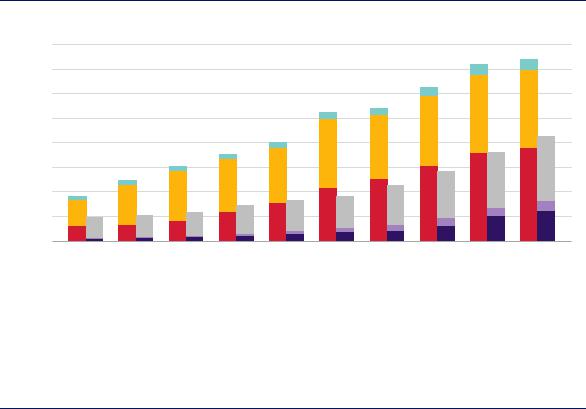
Supplying hydrogen to industrial users is now a major business globally. Demand for hydrogen, which has grown more than threefold since 1975, continues to rise (Figure 1). Demand for hydrogen in its pure form is around 70 million tonnes per year (MtH2/yr). This hydrogen is almost entirely supplied from fossil fuels, with 6% of global natural gas and 2% of global coal going to hydrogen production.1 As a consequence, production of hydrogen is responsible for carbon dioxide (CO2) emissions of around 830 million tonnes of carbon dioxide per year (MtCO2/yr), equivalent to the CO2 emissions of Indonesia and the United Kingdom combined. In energy terms, total annual hydrogen demand worldwide is around 330 million tonnes of oil equivalent (Mtoe), larger than the primary energy supply of Germany.
These existing markets for hydrogen build on its attributes: it is light, storable, reactive, has high energy content per unit mass, and can be readily produced at industrial scale. Today’s growing interest in the widespread use of hydrogen for clean energy systems rests largely on two additional attributes: 1) hydrogen can be used without direct emissions of air pollutants or greenhouse gases; and 2) it can be made from a diverse range of low-carbon energy sources. Its potential supply includes production from renewable electricity, biomass and nuclear. Lowcarbon production from fossil fuels is also possible, if combined with carbon capture, use and storage (CCUS)2 and emissions during fossil fuel extraction and supply are mitigated.
Broadly speaking, hydrogen can contribute to a resilient, sustainable energy future in two ways:
1.Existing applications of hydrogen can use hydrogen produced using alternative, cleaner production methods, and from a more diverse set of energy sources.
2.Hydrogen can be used in a wide range of new applications as an alternative to current fuels and inputs, or as a complement to the greater use of electricity in these applications. In these cases – for example in transport, heating, steel production and electricity – hydrogen can be used in its pure form, or converted to hydrogen-based fuels, including synthetic methane, synthetic liquid fuels, ammonia and methanol.
1A further 45 MtH2/yr are used in industries such as steel and methanol production without prior separation of the hydrogen from other gases.
2The term CCUS is used neutrally throughout this report to refer to the capture of CO2 (before it can be emitted or directly from the air), followed by permanent geological storage or uses of CO2 that deliver equivalent emissions reductions – for example through chemical integration into long-lasting materials. This report also covers the use of captured CO2 as an input to hydrogen-based fuels and feedstocks, which is a form of CCUS with emissions reduction benefits that vary widely with the source of carbon and its final use and are generally not equivalent to geological storage of the CO2.
PAGE | 17
IEA. All rights reserved.
The Future of Hydrogen |
Chapter 1: Introduction |
In both ways, hydrogen has the potential to reinforce and connect different parts of the energy system. By producing hydrogen, renewable electricity can be used in applications that are better served by chemical fuels. Low-carbon energy can be supplied over very long distances, and electricity can be stored to meet weekly or monthly imbalances in supply and demand.
Figure 1. Global annual demand for hydrogen since 1975
Million tonnes of hydrogen
80
70
60
50
40
30
20
10
0
1975 |
1980 |
1985 |
1990 |
1995 |
2000 |
2005 |
2010 |
|
2015 |
2018e |
||||||||
|
|
Refining |
|
Ammonia |
|
|
Other pure |
|
|
Methanol |
|
|
DRI |
|
|
Other mixed |
||
|
|
|
|
|
|
|
|
|
||||||||||
|
|
|
|
|
|
|
|
|
||||||||||
Notes: DRI = direct reduced iron steel production. Refining, ammonia and “other pure” represent demand for specific applications that require hydrogen with only small levels of additives or contaminants tolerated. Methanol, DRI and “other mixed” represent demand for applications that use hydrogen as part of a mixture of gases, such as synthesis gas, for fuel or feedstock.
Source: IEA 2019. All rights reserved.
Around 70 MtH2/yr is used today in pure form, mostly for oil refining and ammonia manufacture for fertilisers; a further 45 MtH2 is used in industry without prior separation from other gases.
2019: A moment of unprecedented momentum for hydrogen
Interest in hydrogen’s potential as a widespread, low-carbon energy carrier is not new. Over recent decades a wide range of experts has researched the potential for producing hydrogen from diverse sources, transporting and storing it, and using it to provide final energy services without emissions. The two previous major cycles of enthusiasm for hydrogen focused largely on the use of fuel cells in the transport sector (Box 1). What is new today is both the breadth of possibilities for hydrogen use being discussed and the depth of political enthusiasm for those possibilities around the world. Hydrogen is increasingly a staple of mainstream energy conversations in almost all regions, with a diverse group of countries and companies all seeing hydrogen as having a potentially valuable and wide-ranging part to play in the future of energy.
PAGE | 18
IEA. All rights reserved.

The Future of Hydrogen |
Chapter 1: Introduction |
|
|
|
|
Box 1. Previous waves of enthusiasm for hydrogen
Hydrogen has seen several waves of interest in recent history, none of which fully translated into rising, sustainable investment. A brief summary of these earlier periods indicates that this may have been because hydrogen scale-up was highly dependent on high and rising prices for oil and gas, and was focused to a considerable extent on a single end-use sector: transport.
Interest in hydrogen rose during the 1970s with oil price shocks, petroleum shortages and attention to air pollution and acid rain. Projections indicated that, in the long term, hydrogen produced from coal or nuclear electricity could have an important role to play in providing energy, particularly for transport. The International Journal of Hydrogen Energy was launched in 1976, and the International Energy Agency (IEA) Hydrogen and Fuel Cell Technology Collaboration Programme was established in 1977. Interest in the potential of hydrogen waned as oil and gas resources proved plentiful, oil prices moderated, nuclear power faced increasing public resistance, and other control measures addressed air pollution problems.
In the 1990s concern about climate change spurred more studies on hydrogen, with a particular focus on carbon capture and storage (CCS), renewable energy and transport. In 1993 Japan announced funding of JPY 4.5 billion for the first four years of its long-term WENET programme for international hydrogen trade based on renewable energy. The European Commission and the Government of Quebec allocated around CAD 33 million to explore together a range of hydrogen storage and use cases, including international hydrogen shipments. Many major automakers unveiled hydrogen cars at motor shows in the 1990s on the back of rapid progress in fuel cell technology. But oil prices remained low through the second half of the decade, stifling support that could have moved these projects closer to the mainstream.
By the early 2000s concern about climate change had begun to translate into renewed policy action aimed at the transport sector, and concerns about peak oil resurfaced. Although nuclear was not universally favoured, hopes for a new generation of cheaper nuclear plants and the thermal splitting of water were central to many low estimates of hydrogen costs. The United States convened the International Partnership for Hydrogen and Fuel Cells in the Economy (IPHE) in 2003. Wider deployment of hydrogen-powered vehicles was frustrated in part by the “chicken and egg” problem of needing to develop infrastructure and vehicles in tandem. By 2010, expectations for hydrogen dipped with the retreat of the peak oil narrative, uncertainty about the strength of climate policy developments and progress with battery electric vehicles, which have less expensive initial infrastructure needs than hydrogen vehicles.
Today’s coalition of voices in favour of hydrogen includes renewable electricity suppliers, industrial gas producers, electricity and gas utilities, automakers, oil and gas companies, major engineering firms and the governments of most of the world’s largest economies. It also includes those who use, or could use, hydrogen as a feedstock for industrial production, not just energy. In 2017 the Hydrogen Council was formed to bring together relevant private-sector players. Its steering group now has 33 members at CEO and chairperson level and 21 supporting members. The possibility that these influential stakeholders will work together to ensure that projects are implemented and markets are developed is an important indication that hydrogen may now command the kind of committed cross-sectoral support it needs for the future.
PAGE | 19
IEA. All rights reserved.
The Future of Hydrogen |
Chapter 1: Introduction |
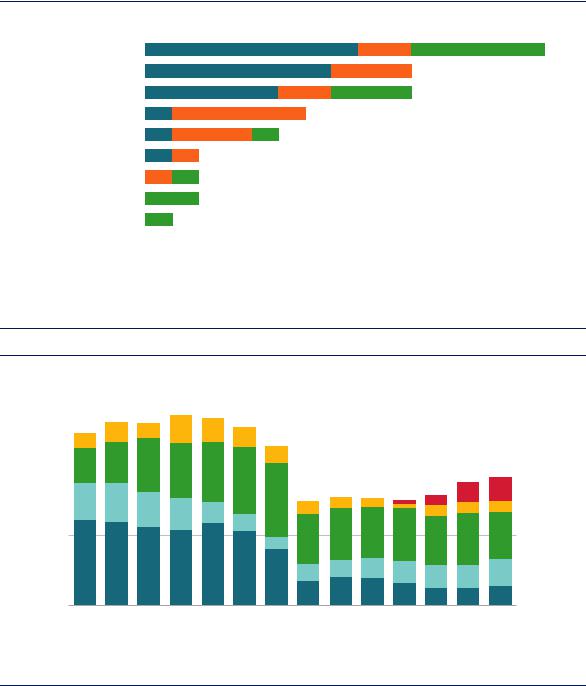
The number of countries with polices that directly support investment in hydrogen technologies is increasing, along with the number of sectors they target. By mid-2019 the total number of targets, mandates and policy incentives in place globally to directly support hydrogen was around 50 (Figure 2). Those that are sector-specific cover six main areas, with transport being by far the largest. Among the Group of Twenty (G20) and the European Union, 11 have such policies in place and 9 have national roadmaps for hydrogen energy. In the past year alone, many governments made notable hydrogen-related announcements (Table 1). Over the past few years, global spending on hydrogen energy research, development and demonstration (RD&D) by national governments has risen, although it remains lower than the 2008 peak (Figure 3).
Figure 2. Policies directly supporting hydrogen deployment by target application
Passenger cars |
|
|
|
|
|
|
|
|
|
|
|
|
|
|
|
|
|
|
|
|
Vehicle refuelling stations |
|
|
|
|
|
|
|
|
|
|
|
|
|
|
|
|
|
|
|
|
|
|
|
|
|
|
|
|
|
|
|
|
|
|
|
|
|
|
|
||
Buses |
|
|
|
|
|
|
|
|
|
|
|
|
|
|
|
|
|
|
|
|
|
|
|
|
|
|
|
|
|
|
|
|
|
|
|
|
|
|
|
||
Electrolysers |
|
|
|
|
|
|
|
|
|
|
|
|
|
|
|
|
|
|
|
|
|
|
|
|
|
|
|
|
|
|
|
|
|
|
|
|
|
|
|
||
Trucks |
|
|
|
|
|
|
|
|
|
|
|
|
|
|
|
|
|
|
|
|
|
|
|
|
|
|
|
|
|
|
|
|
|
|
|
|
|
|
|
||
Buildings heat and power |
|
|
|
|
|
|
|
|
|
|
|
|
|
|
|
|
|
|
||
|
|
|
|
|
|
|
|
|
|
|
Combined incentives with targets |
|
|
|
||||||
|
|
|
|
|
|
|
|
|
|
|
|
|
|
|||||||
|
|
|
|
|
|
|
|
|
|
|
|
|
|
|||||||
Power generation |
|
|
|
|
|
|
|
|
|
|
|
Targets without incentives |
|
|
|
|||||
|
|
|
|
|
|
|
|
|
|
|||||||||||
|
|
|
|
|
|
|
|
|
|
|
|
|
|
|||||||
|
|
|
|
|
|
|
|
|
|
|
|
|
|
|||||||
Industry |
|
|
|
|
|
|
|
|
|
|
|
Incentives without targets |
|
|
|
|||||
|
|
|
|
|
|
|
|
|
|
|
|
|
|
|||||||
|
|
|
|
|
|
|
|
|
|
|
|
|
|
|||||||
Other fleet vehicles |
|
|
|
|
|
|
|
|
|
|
|
|
|
|
|
|
|
|
|
|
|
|
|
|
|
|
|
|
|
|
|
|
|
|
|
|
|
|
|
|
|
0 |
2 |
4 |
6 |
8 |
10 |
12 |
14 |
|
16 |
|||||||||||
|
|
|
|
|
|
|
|
|
|
|
|
|
|
|
Number of countries |
|
|
|||
Note: Based on available data up to May 2019.
Source: IEA analysis and government surveys in collaboration with IEA Hydrogen Technology Collaboration Programme; IPHE (2019), Country Updates.
Figure 3. |
Government RD&D budgets for hydrogen and fuel cells |
||||
million(2018) |
1 200 |
|
|
|
China |
|
|
|
|||
|
|
|
|
||
|
|
|
|
|
|
|
|
|
|
|
|
USD |
800 |
|
|
|
RoW |
|
|
|
|||
|
|
|
|||
|
|
|
|
|
|
 Europe
400
 Japan
0 |
|
United |
|
||
|
||
|
States |
2005 2006 2007 2008 2009 2010 2011 2012 2013 2014 2015 2016 2017 2018e
Notes: Government spending includes European Commission funding, but does not include sub-national funding, which can be significant in some countries. 2018e = estimated; RoW = rest of world.
Source: IEA (2018a), RD&D Statistics.
PAGE | 20
IEA. All rights reserved.