Материал: The_Future_of_Hydrogen-IEA-2020
The Future of Hydrogen |
Chapter 1: Introduction |
Around 11 200 hydrogen-powered cars are already on the road globally, and drivers can choose from several vehicles on the market. Due to the specific advantages of hydrogen in warehouse use, over 20 000 hydrogen forklift trucks are in use. When the IEA published its Technology Roadmap Hydrogen and Fuel Cells in 2015, the first commercially available FCEV powered by hydrogen had only recently been launched, and there were just 80 refuelling stations (IEA, 2015). Now there are 381 hydrogen refuelling stations in operation (AFC TCP, 2018). Around 275 000 fuel cell co-generation systems, fed with natural gas, have now been installed in Japan, and fuel cell costs are reported to be around one-third of their 2015 level (a tenth of their 2005 level). Fuel cell durability is up to 10 000 hours, and stationary fuel cells running 80 000 hours have been reported.
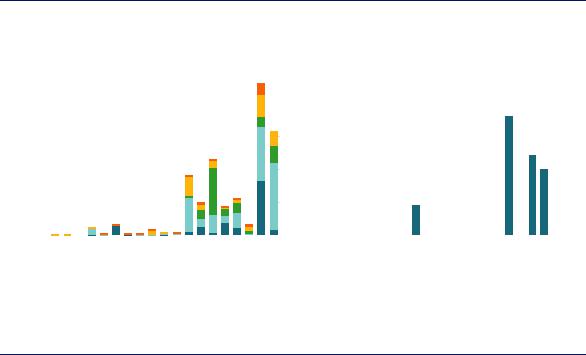
There has been a surge in projects for producing hydrogen for energy and climate purposes in recent years. Since 2000 around 230 projects have entered operation around the world to convert electrical energy to hydrogen for a range of energy and climate applications (Figure 4). The capital costs of the water electrolysers commissioned in 2017 and 2018 represent investment of around USD 20–30 million per year, and associated investments in storage tanks, refuelling infrastructure, pipework and other equipment push total project investment even higher. Among these projects, both alkaline and proton exchange membrane (PEM) electrolysers are commonly used: recent projects have tended to favour PEM, possibly reflecting the fact that many of them test environments for less mature technologies that have high potential for cost reduction. Solid oxide electrolyser cells, which promise higher efficiencies, are also beginning to enter this market. To date, electrolyser sizes for these installed projects have been no higher than 10 megawatts (MWe) (with modules of 2–4 MWe), and generally much smaller. However, a 20 MWe project is currently under construction and several project proposals are above the 100 MWe milestone. A number of the projects have demonstrated the further conversion of hydrogen to synthetic methane, methanol, ammonia and other hydrogen-based fuels and feedstocks.
Figure 4. Capacity of new projects for hydrogen production for energy and climate purposes, by technology and start date
|
|
|
|
|
|
|
|
|
|
|
|
|
|
|
Electrolytic hydrogen |
|
|
|
|
|
|
|
|
|
|
|
|
|
|
|
|
|
|
|
|
|
|
|
|
|
Fossil fuels with CO2 capture |
|
|
|
|
|
|
|
|
|
|
|
|
|
||||||||||||||||||||||||||||||||||||||||||||||||
output |
25 |
|
|
|
|
|
|
|
|
|
|
|
|
|
|
|
|
|
|
|
|
|
|
|
|
|
|
|
|
|
|
|
|
|
|
|
|
|
|
|
|
|
|
|
|
|
|
|
|
|
output |
1 000 |
|
|
|
|
|
|
|
|
|
|
|
|
|
|
|
|
|
|
|
|
|
|
|
|
|
|
|
|
|
|
|
|
|
|
|
|
|
|
|
|
|
|
|
|
|
|
|
|
|
|
|
|
|
|
|
|
|
|
|
|
|
|
|
|
|
|
|
|
|
|
|
|
|
|
|
|
|
|
|
|
|
|
|
|
|
|
|
|
|
|
|
|
|
|
|
|
|
|
|
|
|
|
|
|
|
|
|
|
|
|
|
|
|
|
|
|
|
|
|
|
|
|
|
|
|
|
|
|
|
|
|
|
|
|
|
|
|
|
|
|
|
|
|
|
|
||||||||
20 |
|
|
|
|
|
|
|
|
|
|
|
|
|
|
|
|
|
|
|
|
|
|
|
|
|
|
|
|
|
|
|
|
|
|
|
|
|
|
|
|
|
|
|
|
|
|
|
|
|
800 |
|
|
|
|
|
|
|
|
|
|
|
|
|
|
|
|
|
|
|
|
|
|
|
|
|
|
|
|
|
|
|
|
|
|
|
|
|
|
|
|
|
|
|
|
|
|
|
|
|
|
||
2 |
|
|
|
|
|
|
|
|
|
|
|
|
|
|
|
|
|
|
|
|
|
|
|
|
|
|
|
|
|
|
|
|
|
|
|
|
|
|
|
|
|
|
|
|
|
|
|
|
2 |
|
|
|
|
|
|
|
|
|
|
|
|
|
|
|
|
|
|
|
|
|
|
|
|
|
|
|
|
|
|
|
|
|
|
|
|
|
|
|
|
|
|
|
|
|
|
|
|
|
|
|||
|
|
|
|
|
|
|
|
|
|
|
|
|
|
|
|
|
|
|
|
|
|
|
|
|
|
|
|
|
|
|
|
|
|
|
|
|
|
|
|
|
|
|
|
|
|
|
|
|
|
|
|
|
|
|
|
|
|
|
|
|
|
|
|
|
|
|
|
|
|
|
|
|
|
|
|
|
|
|
|
|
|
|
|
|
|
|
|
|
|
|
|
|
|
|
|
|
|
|
|
|||
MW H |
15 |
|
|
|
|
|
|
|
|
|
|
|
|
|
|
|
|
|
|
|
|
|
|
|
|
|
|
|
|
|
|
|
|
|
|
|
|
|
|
|
|
|
|
|
|
|
|
|
|
|
MW H |
600 |
|
|
|
|
|
|
|
|
|
|
|
|
|
|
|
|
|
|
|
|
|
|
|
|
|
|
|
|
|
|
|
|
|
|
|
|
|
|
|
|
|
|
|
|
|
|
|
|
|
|
|
|
|
|
|
|
|
|
|
|
|
|
|
|
|
|
|
|
|
|
|
|
|
|
|
|
|
|
|
|
|
|
|
|
|
|
|
|
|
|
|
|
|
|
|
|
|
|
|
|
|
|
|
|
|
|
|
|
|
|
|
|
|
|
|
|
|
|
|
|
|
|
|
|
|
|
|
|
|
|
|
|
|
|
|
|
|
|
|
|
|
|
|
|
|
|
|
|
|
|
|
||
|
10 |
|
|
|
|
|
|
|
|
|
|
|
|
|
|
|
|
|
|
|
|
|
|
|
|
|
|
|
|
|
|
|
|
|
|
|
|
|
|
|
|
|
|
|
|
|
|
|
|
|
|
400 |
|
|
|
|
|
|
|
|
|
|
|
|
|
|
|
|
|
|
|
|
|
|
|
|
|
|
|
|
|
|
|
|
|
|
|
|
|
|
|
|
|
|
|
|
|
|
|
|
|
|
|
|
|
|
|
|
|
|
|
|
|
|
|
|
|
|
|
|
|
|
|
|
|
|
|
|
|
|
|
|
|
|
|
|
|
|
|
|
|
|
|
|
|
|
|
|
|
|
|
|
|
|
|
|
|
|
|
|
|
|
|
|
|
|
|
|
|
|
|
|
|
|
|
|
|
|
|
|
|
|
|
|
|
|
|
|
|
|
|
|
|
|
|
|
|
|
|
||||||
|
5 |
|
|
|
|
|
|
|
|
|
|
|
|
|
|
|
|
|
|
|
|
|
|
|
|
|
|
|
|
|
|
|
|
|
|
|
|
|
|
|
|
|
|
|
|
|
|
|
|
|
|
200 |
|
|
|
|
|
|
|
|
|
|
|
|
|
|
|
|
|
|
|
|
|
|
|
|
|
|
|
|
|
|
|
|
|
|
|
|
|
|
|
|
|
|
|
|
|
|
|
|
|
|
|
|
|
|
|
|
|
|
|
|
|
|
|
|
|
|
|
|
|
|
|
|
|
|
|
|
|
|
|
|
|
|
|
|
|
|
|
|
|
|
|
|
|
|
|
|
|
|
|
|
|
|
|
|
|
|
|
|
|
|
|
|
|
|
|
|
|
|
|
|
|
|
|
|
|
|
|
|
|
|
|
|
|
|
|
|
|
|
|
|
|
|
|
|
|
|
|
||||||
|
0 |
|
|
|
|
|
|
|
|
|
|
|
|
|
|
|
|
|
|
|
|
|
|
|
|
|
|
|
|
|
|
|
|
|
|
|
|
|
|
|
|
|
|
|
|
|
|
|
|
|
|
0 |
|
|
|
|
|
|
|
|
|
|
|
|
|
|
|
|
|
|
|
|
|
|
|
|
|
|
|
|
|
|
|
|
|
|
|
|
|
|
|
|
|
|
|
|
|
|
|
|
|
|
|
2000 |
2002 |
2004 |
2006 |
|
|
2008 |
2010 |
2012 |
|
|
2014 |
|
|
2016 |
|
|
2018 |
|
|
|
2000 |
2002 |
|
|
2004 |
2006 |
2008 |
2010 |
|
|
2012 |
|
|
2014 |
2016 |
2018 |
|
||||||||||||||||||||||||||||||||||||||||||||||||||||||||||||||||
|
|
|
Industrial feedstocks |
|
|
|
|
|
|
|
Vehicles |
|
|
|
|
|
|
|
|
Gas grid injections |
|
|
|
|
|
|
|
|
Electricity storage |
|
|
|
|
|
|
|
|
|
|
|
|
Heat |
|
|
|
|
|
|||||||||||||||||||||||||||||||||||||||||||||||||||||||
|
|
|
|
|
|
|
|
|
|
|
|
|
|
|
|
|
|
|
|
|
|
|
|
|
|
|
|
|
|
|
|
|
|
|
|
|
|
|
|
|
||||||||||||||||||||||||||||||||||||||||||||||||||||||||||||||
|
|
|
|
|
|
|
|
|
|
|
|
|
|
|
|
|
|
|
|
|
|
|
|
|
|
|
|
|
|
|
|
|
|
|
|
|
|
|
|
|
||||||||||||||||||||||||||||||||||||||||||||||||||||||||||||||
Sources: IEA analysis based on Chehade et al. (2019), “Review and analysis of demonstration projects on Power-to-X pathways in the world”, IEA (2018), World Energy Investment, and the World Energy Council (2018), “Hydrogen an enabler of the Grand Transition” and data provided by IEA Hydrogen Technology Collaboration Programme.
Since 2000 nine facilities have begun capturing the CO2 from fossil fuel-based hydrogen production for industrial applications, although the next such projects are not expected to start for several years. During this period turbines have also been developed to burn 100% hydrogen
PAGE | 26
IEA. All rights reserved.
The Future of Hydrogen |
Chapter 1: Introduction |
produced from coal gasification with CCUS. Most of these projects are in North America, but there are also examples in France, Japan and Abu Dhabi. While some sell the captured CO2 for industrial uses, most store it underground, either via enhanced oil recovery or dedicated geological storage.
While most of these projects received direct public support, including from research budgets, they involve publicand private-sector partners who have shown the technologies to be effective and have learned much about how to manage project risks and contractual considerations. Many stakeholders today share the opinion that technologies such as fuel cells, water electrolysers, hydrogen refuelling and hydrogen turbines are now mainly waiting for large-scale demand and standardisation and not further technological development. Fuel cell costs, in particular, are expected to greatly benefit from mass manufacturing (Chapter 5).
However, significant challenges remain
While the factors in favour of a sustained upswing in investment in hydrogen are much stronger and better aligned than in any prior period, significant challenges still need to be addressed. Overcoming these challenges will be central to launching the virtuous cycle for hydrogen that has benefited other clean energy technologies: (a) policy support and regulatory changes stimulate first movers in low-risk applications; (b) a positive track record attracts private finance and enables a policy shift from direct support to market-based incentives; (c) high and widespread expectations for deployment unlock public and private investment in long-lasting infrastructure and manufacturing; (d) the creation of a multi-billion dollar marketplace stimulates cost reductions through competition and innovation; (e) customers, investors and suppliers become reliant on the technology and each other, providing long-term stability.
Policy makers and businesses around the world are currently working with a wide range of stakeholders to tackle challenges and reduce the risks that currently slow progress through the first two of these steps. The challenges can be grouped into three broad categories.
Challenge 1) Policy and technology uncertainty
Climate change ambition remains the single most important driver for widespread use of clean hydrogen. The speed with which governments will push the transition to low-carbon energy sources in different countries and sectors remains a major uncertainty. While low-carbon hydrogen can be attractive in the near term in certain applications, its major strength is its ability to help deliver very low emissions pathways and manage very high levels of variable renewable electricity. In the absence of clear, and ideally binding, commitments to sustainable and resilient energy systems in the long term, major financial commitments to hydrogen technologies and infrastructure are much less attractive. Policy frameworks that support revenue from low-carbon hydrogen projects in the near term are also required and, despite recent government activity, they are not fully developed in most countries and regions. In some countries this reflects the lack of overarching long-term energy strategies, but it also signifies technology uncertainty.
Most applications for low-carbon hydrogen are not cost-competitive without direct government support. Yet the relative costs of producing hydrogen from different sources in different regions, and how they will compete in the future, are unclear. This makes it difficult to compare potential future hydrogen prices with those of alternatives such as solid-state batteries, pumped-storage hydropower, electric vehicles, biofuels and electrification of high-temperature heat, many of which have head starts and could reap the benefits of path dependency. In the case of fuel cells, the speed of cost reduction is a key factor, yet experts disagree on the relationship between the scale of fuel cell demand, cost and performance improvements.
PAGE | 27
IEA. All rights reserved.
The Future of Hydrogen |
Chapter 1: Introduction |
Technology uncertainty is also evident in discussions about the ways in which hydrogen could be transported over long distances, and the formats in which it could be delivered to end-users.
Challenge 2) Value chain complexity and infrastructure needs
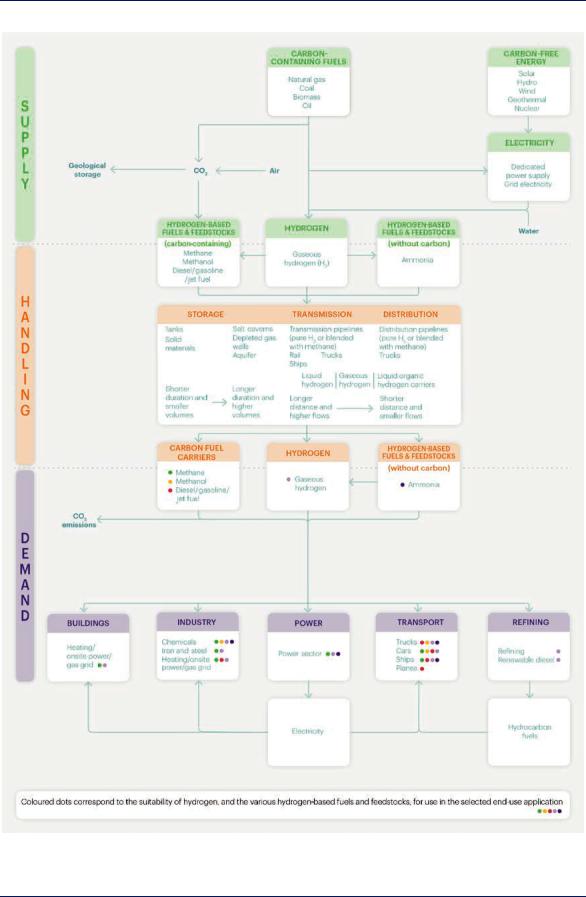
Hydrogen value chains can follow many different paths (Figure 5). Demand for low-carbon hydrogen can come from a variety of sectors, and there are many permutations of hydrogen supply and handling that could meet it. The most cost-competitive outcome will, moreover, be different in various regions and applications. For each possible value chain, investments and policies need to be synchronised in scale and time if hydrogen is to be produced and delivered to end users that are ready to use it. Building trust throughout the value chain so that investments are co-ordinated takes time and may require new contractual relationships. In some cases, governments and companies will need to think and act cross-sectorally in new ways to take full advantage of hydrogen’s flexibility.
Infrastructure such as pipeline and delivery networks is of particular importance for a new energy carrier such as hydrogen. While hydrogen can be produced locally, its storage and distribution benefit from economies of scale. When produced from fossil fuels in particular, its supply is cheaper when centralised. In the case of hydrogen use for road transport, where a network of refuelling stations will be a precondition for widespread adoption of FCEVs, the current pace of infrastructure development is a brake on adoption. The ability of governments to commit to large (and necessary) infrastructure investments is limited in many countries and regions: public–private investment models can help, but may add further complexity. In some cases, these investments will also need to be co-ordinated across borders, requiring international collaboration at a level not yet seen for hydrogen.
Challenge 3) Regulations, standards and acceptance
Around the world, the state of existing regulations and standards currently limits hydrogen uptake. Certain regulations are unclear or not written with new uses of hydrogen in mind and do not allow exploitation of the full benefits hydrogen can provide. They deal with a range of technical but important questions such as how and where pressurised or liquefied hydrogen can be used, who can handle hydrogen, where hydrogen vehicles can go, tax regimes for conversion between energy carriers, whether CO2 can be stored, and how much hydrogen can be present in natural gas pipelines. They need to be updated if hydrogen is to have the opportunity to fulfil its potential.
Some important standards have yet to be agreed, including standards dealing with hydrogen vehicle refuelling, gas composition for cross-border sales, safety measures, permitting, materials and how to measure lifecycle environmental impacts. The issue of lifecycle impacts poses a particular challenge in the case of hydrogen because identical hydrogen molecules can be produced and combined from sources with very different CO2 intensities. Unlike electricity, hydrogen and hydrogen-based fuels can be blended with fossil fuels in mixtures that end-users cannot identify. Accounting standards for different sources of hydrogen along the supply chain may be fundamental to creating a market for low-carbon hydrogen and need to be developed on an internationally agreed basis.
Hydrogen comes with safety risks, high upfront infrastructure costs and some of the industrial dynamics of fossil fuel supply and distribution, especially when paired with CCUS. It is not yet clear how citizens will react to these aspects of hydrogen, or how they will weigh them alongside the convenience and environmental benefits of some hydrogen applications, as well as the potential importance of hydrogen to long-term sustainability.
PAGE | 28
IEA. All rights reserved.
The Future of Hydrogen |
Chapter 1: Introduction |
Figure 5. A guide to the hydrogen energy value chain, from supply to end use
Source: IEA 2019. All rights reserved.
Hydrogen can be produced from a wide variety of sources and used in a wide variety of applications, with value chains containing different combinations of supply, handling and demand technologies.
PAGE | 29
IEA. All rights reserved.

The Future of Hydrogen |
Chapter 1: Introduction |
The crucial role for governments
The risk that today’s interest in hydrogen does not translate into sustainable deployment and instead leads to a further cycle of disappointment is very real. Governments have a central role to play in avoiding this outcome and in helping hydrogen to achieve its potential. That raises the question of how far governments should go to facilitate the uptake of low-carbon hydrogen in the near term. Governments might be tempted to take a technology-neutral approach and leave it to the market to decide which technologies are adopted. This approach is generally sensible, but for the case of hydrogen there are also strong arguments for governments to take a more enabling approach. Indeed, as described previously, a number of governments are already doing so, as they have previously done for various low-carbon technologies.
This report sets out to help public and private decision makers by providing the following:
Chapters 2 to 5 combine key facts about hydrogen and energy with rigorous analysis. They deal with the supply of hydrogen (Chapter 2); its storage, transmission and distribution (Chapter 3); and its various end-use applications (Chapters 4 and 5). The cutting-edge analysis, including sensitivities, is intended to help governments put the facts into context and gauge their importance. This report does not present new scenarios for hydrogen deployment, but instead outlines the current status of technologies, their possible future development, and their economic and policy context (Box 2). Further work at both a global and local level will be required to inform specific policies, building upon the foundation provided by this report and the rapidly growing evidence base around the world.
Chapter 6 provides suggestions for policies to build a springboard for hydrogen’s greater use over the next decade via the most promising near-term value chains. It identifies four real-world interconnected value chains that offer realistic potential to scale up clean hydrogen and to reduce costs, and concludes by highlighting specific, action-oriented recommendations for governments to consider.
There are no easy answers to the questions currently facing decision makers, but the report finds several compelling reasons why governments might choose to consider boosting their efforts in support of low-carbon hydrogen. Individual governments will of course rightly want to weigh all the relevant facts, consider the analysis and come to their own conclusions in the light of their own circumstances. This report is intended to help inform deliberations and decisions by governments, as well as to inform discussions among governments and between governments and companies and other stakeholders.
Box 2. How this report manages uncertainties about present and future costs and potentials
The aim of this report is not to describe a vision for hydrogen in a future energy system, but rather to outline the status of technologies and their possible future development, and to describe their economic and policy context. Given the level of uncertainty about some of the relevant technologies and their competitors, certain assumptions have been made in order to present reasonable comparisons for the present and the future.
Parameters for the cost and performance of technologies have been based on extensive literature analysis, conversations with experts and peer review. The values behind the numbers and charts in
PAGE | 30
IEA. All rights reserved.