Материал: Uchebnik_dlya_sud_expertov
7.Did he have any special reason for saying that?
3., ing- # !-
. , # .
1.The bus passed without stopping.
2.Learn to swim by swimming.
3.On arriving at the station they found out that the train had started.
4.Making sure I had the right number, I phoned again.
5.Having passed my driving test, I was able to buy my first car.
6.She spent all yesterday afternoon cleaning the flat.
4., ing- #
. , # .
1.The train arriving at platform 8 is the 17.50 from London.
2.The white stone house being built near the park is a new building of the Art Museum.
3.Law dealing with the structure of the government is called constitutional.
4.Employment law is the law relating to the employment of workers, their contracts, and conditions of work.
5.Contract law deals with legally binding agreements between people or companies.
5., ing- #
. , # -
.
1.The weather this summer is disappointing.
2.The tone in which she spoke with me was convincing.
3.The students’ tests results were pleasing.
6., ! ' ing- . ,
$ #. !$ #'
. .
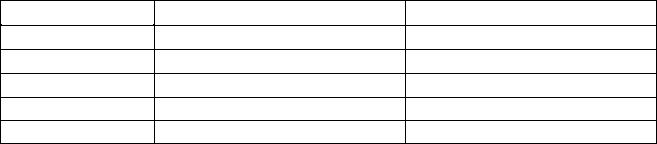
FUNCTION |
EXAMPLES |
TRANSLATION |
Subject
Object
Predicative
Attribute
Adverbial Modifier
156
1.I have been convicted of breaking the law because I was trying to stop others from doing so. It’s totally unjust.
2.Generally speaking, this law treats of rules, principles, and maxims which govern the decisions of a court.
3.The law may be seen as a binding or enforceable rule of conduct passed by legislation, and recognized as such by the community.
4.Laws can also be classified as being either Substantive, or Procedural Law.
5.English law has an evolving history dating from the local customs of the Anglo-Saxons, traces of which survived until 1925.
6.Every country has its own historically developing system of norms, legal institutions and branches of law, which regulates different types of social relations.
7.Contract law deals with legally binding agreements between people or companies that are called parties to a contract.
8.Having explained this simple law of war that delivers all enemy persons and property absolutely to the victor or occupant, the author approaches the more intricate subject of neutrality.
9.The rules of bringing the breaching party into court and the conduct of the trial are rather mechanical and constitute procedural law.
10.A clearer comparative understanding is also critical in assessing the effects of Western legal ideas in Russia.
11.If an Englishman wants to sell property he owns in France to another Englishman, any English court must consider French law when deciding the legality of the contract of sale.
12.In all legal systems there are institutions for creating, modifying, abolishing and applying the law.
7. ). ing – . , #
, , - # & # .
). Matt and Luther decide to skip school. They take Luther’s brother’s car without telling him and drive to a local shopping center. Ignoring the sign “Parking for Handicapped Persons Only”, they leave car and enter a radio and TV shop. After looking around, they buy a portable AM-FM radio. Then they buy some sandwiches from a street vendor and walk to a nearby park. While eating, they discover that the radio does not work. In their hurry to return it, they leave their trash on the park bench. When Matt and Luther get back to the shopping center, they notice a large dent in one side of their car. The dent appears to be the result of a driver’s carelessly backing out of the next space. They also notice that the car has been broken into and that the tape deck has been removed. They call the police to report the accident and theft. When the police arrive, they seize a small clear bag containing illegal drugs from behind the car’s back seat. Matt and Luther are arrested.
B. ! , #' # &- & .
Matt and Luther decided to skip school. They (take) Luther’s brother’s car without (tell) him and (drive) to a local shopping center. (Ignore) the sign “Parking for Handicapped Persons Only”, they (leave) car and (enter) a radio and TV shop. After (look) around, they (buy) a portable AM-FM radio. Then they (buy) some sandwiches from a street vendor and (walk) to a nearby park. While (eat), they (discover) that the radio (not work). In their hurry to return it, they (leave) their trash on the park bench. When Matt and Luther (get back) to the shopping center, they (notice) a large dent
157
in one side of their car. The dent (appear) to be the result of a driver’s carelessly backing out of the next space. They also (notice) that the car ( be broken) into and that the tape deck (be removed). They (call) the police to report the accident and theft. When the police (arrive), they (seize) a small clear bag (contain) illegal drugs from behind the car’s back seat. Matt and Luther (be arrested).
8. % ! . ! . ( #
.
1.What offences did Matt and Luther commit?
2.What branches of law are involved in the story?
9. .
TEXT
CLASSIFICATION OF LAW
Every country has its own historically developing system of norms, legal institutions and branches of law, which regulates different types of social relations. In order to understand different aspects of a system of law it is necessary to look at various classifications of law. Numerous classifications that vary from country to country usually reflect the peculiarities of different systems of law. Nevertheless there are the most common divisions singled out by contemporary jurists. Thus law is frequently classified into public and private and substantive and procedural.
The distinction is often made between public and private law. Public law deals with matters that affect society as a whole. It includes areas of the law that are known as criminal, constitutional and administrative law. These are the laws that deal with the relationship between the individual and the state, or among jurisdictions. For example, if someone breaks a criminal law, it is regarded as a wrong against society as a whole, and the state takes steps to prosecute the offender.
Private law, on the other hand, deals with the relationships between individuals in society and is used primarily to settle private disputes. Private law deals with such matters as contracts, property ownership, the rights and obligations of family members, and damage to one's person or property caused by others. When one individual sues another over some private dispute, this is a matter for private law. Private suits are also called "civil" suits.
The next classification which is widely used is subdivision of law into substantive and procedural. There are many laws and legal rules found in statutes, cases decided by courts (legal precedents) and other sources that are applied by courts in order to decide lawsuits. These rules and principles of law are classified as substantive law. On the other hand, the legal procedures that provide how lawsuit is begun, how the trial is conducted, how appeals are filed, and how a judgment is enforced are called procedural law. In other words, substantive law is the part of the law that defines rights, and procedural law establishes the procedures which enforce and protect these rights. For example, two parties entered into a contract, but then one of the parties breached this contract. The rules of bringing the breaching party into court and the conduct of the trial are rather mechanical and constitute procedural law. Whether the agreement was enforceable and whether the other party is entitled to damages are matters of substance and will be determined on the basis of the substantive law of contract.
The jurists of all countries admit that it is necessary to differentiate between international law and national law. The latter is also called domestic law or municipal law. Domestic law is the law which is applicable within the boundaries of one state. International law is the body of legal rules that regulate relations between sovereign states. It is a special system which is not a part of the national law of the state. There are some important differences between international law and do-
158

mestic law. Domestic laws are passed by legislative bodies, most of which have popular political support. International laws, on the other hand, are created by agreements between governments of different states. As a result, they don’t have the support from individual citizens. Enforcement of international laws is also different. Many international agreements or treaties are not binding; even when nations agree to be bound, it is unclear how obligations to be enforced. Countries differ greatly with regard to the importance attached to international obligations. Some states consider international obligations superior to their domestic laws, but in most cases international obligation are considered as a part of national law.
10. ! .
1. public law |
a. & $ |
|
2. private law |
b. )$ |
|
3. substantial law |
c. |
|
4. procedural law |
d. |
|
5. a wrong against society |
e. |
|
6. to prosecute the offender |
f. ) & $ |
|
7. to settle private disputes |
g. $ |
|
8. damage to one's person or property |
h. $ |
|
9. legal precedents |
i. $ ) |
|
10. legal procedure |
j. |
|
11. to enter into a contract |
k. ) $ |
& |
12. to breach the contract |
l. $ |
|
13. domestic law or municipal law |
m. $ |
|
14. agreements between governments |
n. |
|
15. to be entitled to damages |
o. |
|
16. international obligations |
p. |
|
11.:
1.reflect the peculiarities of different systems of law
2.common division
3.subdivision of public law
4.contemporary jurists
5.the relationships between individuals
6.private suits
7.laws and legal rules
8.to file appeals
9.to enforce judgment
10.sovereign states
11.breaching party
12.treaties are not binding
12., .
1. ,
2.) &
3.$
159
4. |
|
|||
5. |
, |
)$ & |
||
6. |
|
) |
||
7. |
|
$ |
||
8. |
|
$ - |
||
9. |
" |
) |
||
10. |
|
|||
11. |
|
$ |
||
12.&
13., , #'
. , ( ,
.
|
|
|
&
14. . |
|
|
|||
1. |
& - |
||||
|
, |
) " & $ . |
|
||
2. |
> , ) |
||||
|
. |
|
|
|
|
3. |
0 |
- $ ) & |
- |
||
|
* . |
|
|
|
|
4. |
|
, & , " |
|||
|
). |
|
|
|
|
5. |
+ # , |
|
|||
|
$ $ . |
|
|||
6. |
$ $ $ |
" |
" - |
|
|
|
". 3 $ " *, - |
||||
|
$ |
) ". $ |
|
||
|
) # |
", |
|
||
|
$ " . |
|
|
||
160