Материал: Uchebnik_dlya_sud_expertov

Внимание! Если размещение файла нарушает Ваши авторские права, то обязательно сообщите нам

A forensic generalist is a particular kind of forensic scientist who is broadly trained in a variety of forensic specialties. They are big picture people who can help reconstruct a crime from work performed with the assistance of other forensic scientists, and then direct investigators to forensic specialists as needed. They can also make for good crime lab administrators or directors.

Because of the depth and complexity of criminalistics, the need for specialists is inescapable. There can be serious problems, however, with overspecialization. Persons who have working knowledge of a broad range of criminalistics problems and techniques are also necessary. These people are called generalists. The value of generalists lies in their ability to look at all of the aspects of a complex case and decide what needs to be done, which specialists should be involved, and in which order to carry out the required examinations.

The generalist typically has broad education and training in the major forensic sciences, and will often have a master's or doctorate level education. However, many of those claiming to be generalists have only a law enforcement background with no formal science education. These are often police technicians who have confused their role with that of forensic scientist.

As suggested, a related profession is that of evidence technician. An evidence technician is charged with the recognition, documentation, collection, and preservation of physical evidence. Sometimes they even have training, though this is not necessary. A full time evidence technician is typically not a forensic scientist, and is not necessarily qualified to examine forensic evidence and interpret its meaning. Evidence technicians may be attached to the police department, the crime lab, or the medical examiners office. They are not necessarily sworn police officers, though they can be. It is common for technicians not to have attended a four-year degree program at a college or university. Some have two year associates degrees, and still others have only on the job training with a high-school diploma. In many jurisdictions, police officers must do this work themselves with little or no forensic training, for lack of specialized assistance.

7. .

1. to give expert testimony

a. ) #

2. to provide interpretations under oath

b.


3. to testify to their findings

c. $


$ -


4. on behalf of the law

d. $ %


5. just resolution of conflict

e. $


6. the outcome of the examination

f. $ $ $ %


7. to be trained in crime reconstruction

g.


8. big picture people

h. $ - "


9. to have law enforcement background

i. $

%


10. to be charged with documentation

j. $ -

and collection of physical evidence


11. preservation of physical evidence

k. $


12. a high-school diploma

l.


$


8. !$ $ ,

! , ! !, !

!.

256

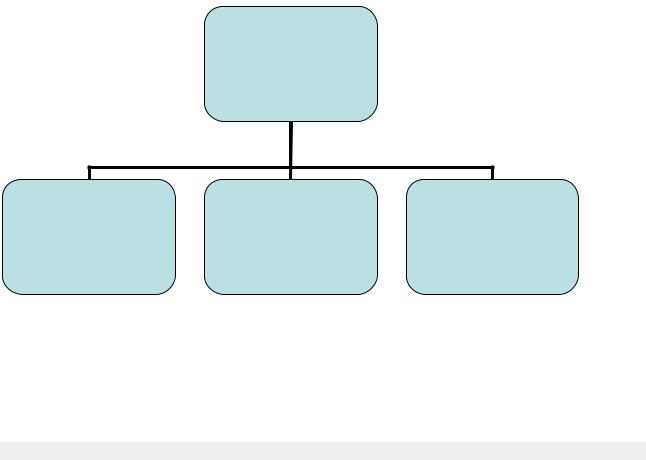
JOB

PLACE OF WORK

EDUCATION

RESPONSIBILITIES

Criminalist

Forensic generalist

Evidence technician

9. , & ! # #' , , !-

! ! (

! ).

INTERNAL MEMORANDUM

From:

To:

Date:

Dear Mr. ….

I am writing to remind you that you are involved with a newly emerging forensic science specialty, so …..

A variety of skills are essential to an individual’s effectiveness as a forensic science professional, ……

SKILLS AND QUALITIES REQUIRED

Great patience and concentration: much work is monotonous, painstaking, detailed and routine.

High quality of analytical work.

Excellent attention to detail.

Logical, unbiased and methodical in your approach to solving problems as you will have to give impartial evidence in court.

An inquisitive, open mind.

Work well in a team and independently.

Outgoing personality with strong verbal communication and presenting skills for reporting roles.

257

PROFESSIONAL SKILLS

Critical thinking (quantitative reasoning and problem solving).

Decision-making.

Good laboratory practices.

Awareness of laboratory safety.

Observation and attention to detail.

Computer proficiency.

Interpersonal skills.

Public speaking.

Oral and written communication.

Time management.

Prioritization of tasks.

10..

1.

– % " )

.

2.

2$ " % " " -


# .


3.

%

$ & $

& -


.


4.

%

(is concerned) " & -

, ) .

5.%, % -

$ , #$ $ " # %-.

6.% $ $ $ % .

11. . .

TEXT

(Title)_________________________________________________

1._________________________________________________________________________

2. ________________________________________________________________________

a)_____________________________________________________________

b)_____________________________________________________________

c)_____________________________________________________________

3._________________________________________________________________________

a)______________________________________________________________

b)______________________________________________________________

Forensic science is a multidisciplinary subject used for examining crime scenes and gathering evidence to be used in prosecution of offenders in a court of law. Forensic science techniques are also used to examine compliance with international agreements regarding weapons of mass destruction.

The main areas used in forensic science are biology, chemistry, and medicine, although the science also includes the use of physics, computer science, geology, and psychology. Forensic scientists examine objects, substances (including blood or drug samples), chemicals (paints, explo-

258
sives, toxins), tissue traces (hair, skin), or impressions (fingerprints or tidemarks) left at the crime scene. The majority of forensic scientists specialize in one area of science.

Evidence and Trace Examination

The analysis of the scene of crime or accident involves obtaining a permanent record of the scene (forensic photography) and collection of evidence for further examination and comparison. Collected samples include biological (tissue samples such as skin, blood, semen, or hair), physical (fingerprints, shells, fragments of instruments or equipment, fibers, recorded voice messages, or computer discs) and chemical (samples of paint, cosmetics, solvents, or soil).

Most commonly, the evidence collected at the scene is subsequently processed in a forensic laboratory by scientists specializing in a particular area. Scientists identify, for example, fingerprints, chemical residues, fibers, hair, or DNA left behind. However, miniaturization of equipment and the ability to perform most forensic analysis at the scene of crime results in more specialists being present in the field. Presence of more people at the scene of crime introduces a greater likelihood of introduction of contamination into the evidence. Moreover, multi-handling of a piece of evidence (for example a murder weapon being analyzed by many specialists) is also likely to introduce traces of tissue or DNA not originating from the scene of a crime. All this results in strict quality controls imposed on collection, handling, and analysis of evidence to ensure lack of contamination. For example, in DNA analysis it is essential that samples are stored at the correct temperature and that there is no contamination from a person handling a sample by wearing clean gloves and performing analysis in a clean laboratory.

Ability to properly collect and process forensic samples can affect the ability of the prosecution to prove their case during a trial. The presence of chemical traces or DNA on a piece of debris is also crucial in establishing the chain of events leading to a crime or accident.

A growing area of forensic analysis is monitoring non-proliferation of weapons of mass destruction, analysis of possible terrorist attacks or breaches of security. The nature of samples analyzed is wide, but slightly different to a criminal investigation. In addition to the already described samples, forensic scientists who gather evidence of mass destruction collect swabs from objects, water, and plant material to test for the presence of radioactive isotopes, toxins, or poisons, as well as chemicals that can be used in production of chemical weapons. The main difference from the more common forensic investigation is the amount of chemicals present in a sample. Samples taken from the scene of suspected chemical or biological weapons often contain minute amounts of chemicals and require very sensitive and accurate instruments for analysis.

Biological traces.

Biological traces are collected not only from the scene of crime and a deceased person, but also from surviving victims and suspects. Most common samples obtained are blood, hair, and semen. DNA can be extracted from any of these samples and used for comparative analysis.

DNA is the main method of identifying people. Victims of crashes or fires are often unrecognizable, but adequate DNA can be isolated and a person can be positively identified if a sample of their DNA or their family's DNA is taken for comparison. Such methods are being used in the identification of the remains in Yugoslav war victims, the World Trade Center terrorist attack victims, and the 2002 Bali bombing victims.

Biological traces, investigated by forensic scientists come from bloodstains, saliva samples (from cigarette buts or chewing gum) and tissue samples, such as skin, nails, or hair. Samples are processed to isolate the DNA and establish the origin of the samples. Samples must first be identified as human, animal, or plant before further investigation proceeds. For some applications, such as customs and quarantine, traces of animal and plant tissue have to be identified to the level of the species, as transport of some species is prohibited. A presence of a particular species can also prove that a suspect or victim visited a particular area. In cases of national security, samples are tested for the presence of pathogens and toxins, and the latter are also analyzed chemically.

259

12..

1.What is forensic science used for?

2.What do forensic scientists examine?

3.What does the analysis of the scene of crime or accident involve?

4.Is it possible to perform most forensic analysis at the scene of crime?

5.What do the presence of more people at the scene of crime and multi-handling of a piece of evidence require?

6.What affects the ability of the prosecution to prove their case during a trial?

7.What do forensic scientists who gather evidence of mass destruction collect?

8.How are biological traces collected?

9.Where is DNA analysis method used?

10.Where do biological traces come from?

11.What is the main idea of the text?

13.$ , .

?

?

?

?

14. ( .

Forensic Scientist Interview

Michael Howard

Job Title: Forensic Scientist (Criminalist), Self-employed

Years in Field: 29 years

Michael Howard explains educational requirements, skills needed, misconceptions and other factors involved in his work as a forensic scientist.

260

Источник: https://studfile.net/preview/16694066/