Материал: Апсе ENVIRONMENTAL PROTECTION 2014
Extractant |
Light organic fraction |
TBP |
(extract) |
|
|
Heavy frac- |
SNF solu- |
|
tion (raffi- |
tion |
Mixer |
nate) |
|
Settler |
|
|
|
|
Organic fraction |
|
|
Extractant
Aqueous |
|
Aqueous frac- |
|
washing solu- |
Mixer |
||
tion |
|||
tion |
|||
|
(re-extract) |
||
|
|
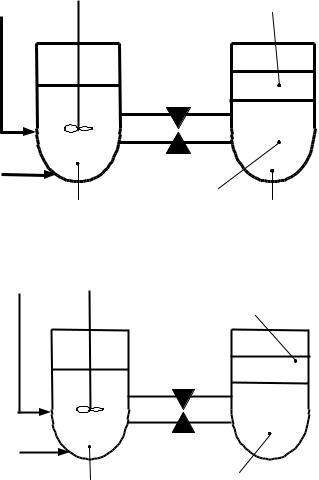
Fig. 1.6. The extraction – re-extraction process
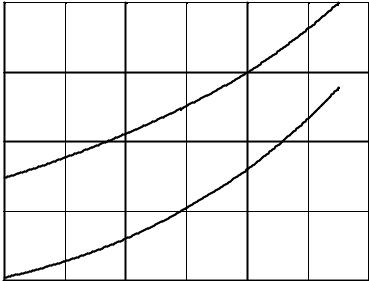
The well-known quadratic dependencies of the distribution ratios on the SNF solution acidity are shown in Fig. 1.7 for uranium (a typical
86
representative of fuel materials) and for zirconium (a typical representative of fission products).
|
100 |
D |
|
|
|
|
|
|
|
|
|
|
|
|
|
|
|
|
|
|
|
Uranium |
|
ratio |
10 |
|
|
|
|
|
|
|
|
|
|
|
FP |
|
|
Distribution |
|
|
|
|
|
|
|
1 |
|
|
|
|
|
|
|
0.1 |
|
|
|
|
|
|
|
|
|
|
|
|
|
|
|
|
|
|
|
|
|
C HNO3 , mol |
|
|
0.01 |
1 |
2 |
3 |
4 |
5 |
6 |
|
0 |
||||||
SNF solution acidity
Fig. 1.7. Dependencies of the distribution ratios on the SNF solution acidity
As it is seen, if nitric acid concentration С(HNO3) belongs to the acidity range from 2 M to 4 M, then the uranium distribution ratio is larger than unity, and fuel materials seek to concentrate in the light organic fraction. Within this acidity range the zirconium distribution ratio is lower than unity, and fission products seek to concentrate in the heavy aqueous fraction. This consideration explains why the SNF solution acidity was corrected to be within the 2-4 M range at the preparatory stage, before the extraction – re-extraction p rocess started. In addition, these dependencies of the distribution ratios on the SNF solution acidity can explain the preferential accumulation of fission products in the aqueous washing solution during the re-extraction process. In the
87

latter case, the uranium distribution ratio D(U) ≈0,1 at С(HNO3) near to zero, and uranium seeks to concentrate in the aqueous washing solution.
Let assume that D(U) = 9 and 100 g U in the acidic SNF solution come to the extraction – re-extraction process. The n, after the first cycle, 90 g U were recovered while 10 g U remained in the aqueous fraction. After the second cycle, additional 9 g U were recovered while 1 g U remained in the aqueous fraction. So, two-three cycles of the extraction – re-extraction process are able to recover up to 99-99,9% U from the initial SNF solution.
TBP radiolysis. The most substantial disadvantage of the solventextraction technology consists in intense radiolysis of organic extractants under ionizing irradiation. The higher radioactivity of the acidic SNF solution, the more intense chemical dissociation of organic extractants occurs. Specific radioactivity of the SNF solutions can reach the level of 500 Ci/l for spent fuel discharged from thermal reactors and the level of 1000 Ci/l for spent fuel discharged from fast reactors. That is why reprocessing of spent fuel with high values of fuel burn-up is a very complicated technology.
Radiolysis of tri-butyl-phosphate can cause the following negative effects:
1. Chemical dissociation of TBP molecules occurs according to the scheme with breaking C4H9-O links:
C4H9 – O |
C 4H9 – O |
C |
4H9 – O |
C4H9 – O – P = О → C4H9 – O – P = O → |
|
H – O – P = O → H3PO4 |
|
C4H9 – O |
H – O |
|
H – O |
i.e. TBP as an organic salt of phosphoric acid transforms, at first, into di-butyl-phosphoric (DBP) acid, then – into mono-bu tyl-phosphoric (MBP) acid, and, finally, into phosphoric acid H3PO4: TBP → Н(DBP) → Н2(MBP) → H3PO4.
2.Appearance of chemically active acids results in forming salts of DBP-, MBP and phosphoric acids containing fission products as metal components. These FP-containing organic salts can concentrate in the light organic fraction and, thus, worsen the SNF reprocessing quality.
3.TBP radiolysis creates the conditions needed to form the third fraction on the interface between the light organic and heavy aqueous frac-
88
tions. The third fraction includes some jelly-like insoluble (or illsoluble) materials which can block technological pipelines at SNF reprocessing plant. The following materials can be components of the third fraction:
a.Compounds of fissile isotopes with TBP radiolysis products.
b.Compounds of fission products with TBP radiolysis products.
c.Products of radiation-induced polymerization of TBP dilutant in the form of stable jelly-like emulsions.
TBP regeneration. When TBP contacts with the SNF solution, salts of DBP-, MBPand phosphoric acids can appear and contain metal fissile materials and fission products. The contaminated TBP can be cleaned with application of the carbonate-alkaline washing-out process. Usually, mixture of soda Na2CO3 with caustic soda NaOH is applied as a washing-out solution. Sodium, as the more chemically active element, substitutes itself for all other metal components in salts of DBP-, MBPand phosphoric acids. The sodium-based salts are well-soluble by water, and they can be easily removed by aqueous washing-out solutions.
The carbonate-alkaline washing-out regeneration process has the following drawbacks:
1.Large volume of middle-level radioactive wastes.
2.Residual plutonium in TBP can concentrate in the washing-out solution, undergo radiation-induced polymerization and fall out as sediment.
3.The process is not able to reach complete TBP purification.
Separation of plutonium from uranium. The uranium-plutonium mixture produced by the solvent-extraction technology contains the following uranium-TBP and plutonium-TBP solvates:
one six-valent uranium-TBP solvate UO2(NO3)2·2TBP;
three plutonium-TBP solvates with different plutonium valencies: trivalent Pu(NO3)3·3 TBP, four-valent Pu(NO3)4·2 TBP and six-
valent PuO2(NO3)2 2 TBP.
Separation of uranium-plutonium mixture is based on experimental fact that trivalent plutonium-TBP solvate Pu(NO3)3 3 TBP is characterized by its minimal solubility in the light organic fraction as compared with solubilities of other uranium and plutonium solvates. Therefore, if all plutonium-TBP solvates are converted into trivalent state by the aqueous reducing solution, then trivalent plutonium-TBP solvate can
89
concentrate in this solution while uranium-TBP solvate remains in the organic fraction.
When separating plutonium from uranium, six-valent plutoniumTBP solvate is reduced, at first, up to four-valent state, then – up to trivalent state and washed out of the organic fraction.
Six-valent plutonium solvate can be reduced up to four-valent state by reaction with potassium nitrite KNO2:
PuO2(NO3)2 + KNO2 → Pu(NO3)4 + KNO3.
Afterwards, four-valent plutonium solvate is reduced up to trivalent state by means of the following methods:
1. Reactions with bivalent iron compounds:
Pu4+ + Fe2+ → Pu3+ + Fe3+.
Iron gives one valent electron to plutonium.
2. Reactions with four-valent uranium compounds:
Pu4+ + U4++ 2 H2O → Pu3+ + UO22+ + 2 H2.
3. Electrochemical plutonium reduction.
If the light organic fraction is washed out by the aqueous reducing solution, then trivalent plutonium concentrates in the aqueous fraction while uranium remains in the organic fraction. Afterwards, the reextraction process is used to recover uranium from the organic fraction by low-concentrated nitric acid HNO3. Uranium transfers into the aqueous fraction (re-extract). This is a final stage of the extraction – reextraction process. Thus, one cycle of this process consists of the following stages:
1.SNF dissolution by nitric acid.
2.Extraction of uranium and plutonium from the acidic SNF solution by organic extractant TBP. Uranium and plutonium are jointly separated from fission products.
3.Re-extraction of plutonium from the organic fraction by the aqueous reducing solution. Sixand four-valent plutonium solvates are reduced
90