Материал: Апсе ENVIRONMENTAL PROTECTION 2014
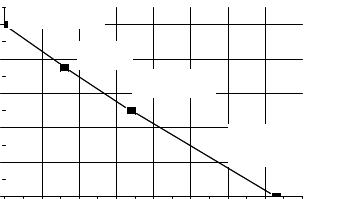
3. The radiation factor f3 (A) depends on radioactivity of the Pu-bearing materials per one gram of contained plutonium. The radiation factor of metal plutonium is assumed as unity.
The generalized attractiveness factor of various Pu-bearing materials is defined as a product of three aforementioned factors (the density, time and radiation factors). The generalized attractiveness factors of various Pu-bearing materials are presented in Table 3.4.
|
1,0 |
Pu-металл |
|
|
|
|
|
|
|
|
Pu-metal |
|
|
|
|
|
|
||
|
0,8 |
|
|
PuO2 |
|
|
|
|
|
|
0,6 |
|
|
|
Pu(NO3)4 |
|
|
|
|
2(t)t) |
|
|
|
|
|
|
|
|
|
|
|
|
|
|
|
|
|
|
|
2 |
|
|
|
|
|
|
|
|
|
f |
|
|
|
|
|
|
|
|
|
f |
0,4 |
|
|
|
|
|
|
|
|
|
|
|
|
|
|
|
|
|
|
|
|
|
|
|
|
|
|
Отвержденные |
|
|
|
|
|
|
|
|
Solidified RAW |
||
|
0,2 |
|
|
|
|
|
|
ВАО |
|
|
|
|
|
|
|
|
|
|
|
|
0,0 |
|
|
|
|
|
|
|
|
|
0 |
50 |
100 |
150 |
200 |
250 |
300 |
350 |
400 |
|
|
|
|
|
|
|
|
Время, сут |
|
|
|
|
|
|
|
|
|
Time, days |
|
Fig. 3.4. Dependency of the time factor on duration of the time interval
|
|
|
|
Table 3.4 |
Attractiveness factors of the Pu-bearing materials |
|
|||
|
|
|
|
|
Material |
f1(V) |
f2(t) |
f3(А) |
f1×f2×f3 |
Pu-metal |
1 |
1 |
1 |
1 |
PuO2 |
0,70 |
0,90 |
1 |
0,63 |
(U,Pu)O2 |
0,40 |
0,65 |
1 |
0,26 |
Pu(NO3)4 |
0,25 |
0,80 |
1 |
0,20 |
SNF solution |
0,06 |
0,35 |
0,004 |
8 × 10⁻⁵ |
Spent fuel assembly |
0,08 |
0,10 |
0,004 |
3 × 10⁻⁵ |
Solidified HLW |
0,05 |
0,02 |
0,001 |
1 × 10⁻⁶ |
151
It is noteworthy that the density and radiation factors characterize the difficulty of obtaining the Pu-bearing materials while the time factor characterizes the difficulty of converting the Pu-bearing materials into a charge of a nuclear explosive device.
Control questions to Chapter 3
1.What stages of nuclear fuel cycles are the most dangerous for nonproliferation of nuclear weapons?
2.What types of nuclear reactors are the most dangerous for nonproliferation of nuclear weapons?
3.Call main stages of the SAFAR reprocessing technology.
4.Call main stages of the gas-fluoride reprocessing technology.
5.Call main stages of the electrochemical refining technology.
6.Call main stages of the DUPIC-technology.
7.Call and describe the attractiveness factors of plutonium-bearing materials.
152
CHAPTER 4. EXPLOSIVE PROPERTIES OF REACTORGRADE PLUTONIUM
Plutonium is an artificial chemical element that has no one stable isotopes. Fortunately, some radioactive plutonium isotopes can decay with half-lives of several thousand and tens of thousand years, i.e. they are sufficiently long-lived radionuclides for their civilian and military applications.
Plutonium was first synthesized in 1940 by the research team from the California University (USA) headed by G.T. Seaborg in experimental studies on bombarding of natural uranium by accelerated deuterons. It is interesting to tell about history of plutonium name. The next, after uranium, chemical element - neptunium – was named a s the planet Neptune, the next, after the planet Uranus, planet in the solar system. Similarly, plutonium, the next chemical element after neptunium, was named as the planet Pluto, the next, after the planet Neptune, planet in the solar system.
There are six metal plutonium allotropes within six temperature ranges where plutonium density varies from 15,9 g/cm3 to 19,6 g/cm3. The most known δ-phase of metal plutonium (γ = 15,9 g/cm3) exists within the temperature range from 3100C to 4500С but this phase may be stabilized at the room temperature by plutonium alloying with Ga, Al or Сe.
|
|
|
|
Table 4.1 |
|
|
Some physical properties of plutonium isotopes |
||||
|
|
|
|
|
|
|
Т1/2, |
Decay heat, |
Spontaneous |
Critical mass, |
|
Isotope |
fission neutrons, |
||||
years |
W/kg |
kg |
|||
|
n/(s·kg) |
||||
|
|
|
|
||
238Pu |
87.7 |
560 |
2.6·106 |
10 |
|
239Pu |
24100 |
1.9 |
22 |
10 |
|
240Pu |
6560 |
6.8 |
9.1·105 |
40 |
|
241Pu |
14.4 |
4.2 |
49 |
10 |
|
242Pu |
376000 |
0.1 |
1.7·106 |
100 |
|
Main channels of plutonium radioactivity are alpha-decays and spontaneous fission reactions. Retardation of heavy α-particles by plutonium
153
mass defines its decay heat generation while spontaneous fission reactions define neutron activity of plutonium isotopes. Some physical properties of main plutonium isotopes are presented in Table 4.1.
Plutonium is already used for a sufficiently long time period as a basic component of mixed uranium-plutonium oxide (MOX) fuel loaded into nuclear power reactors in France and Belgium.
As is known, consecutive neutron captures by main uranium isotope 238U can build-up, at first, well-fissile plutonium isotope 239Pu and, then the heavier plutonium isotopes. If neutron irradiation lasts a relatively
short time, then fraction of the heavier plutonium isotopes (next after 239Pu) can be very small (several percents of 240Pu and much lower con-
tents of 241Pu and 242Pu). Plutonium with such isotope composition is the most suitable fissile material for manufacturing of nuclear explosive devices (NED) and, therefore, this plutonium was named as weapongrade plutonium (WG-Pu). Under long irradiation time and high fuel burn-up, plutonium isotope composition shifts towards the larger fraction of the heavier plutonium isotopes. Such plutonium was named as reactor-grade plutonium (RG-Pu). Typical isotope compositions of RGPu are presented in Table 4.2 for various values of fuel burn-up in lightwater PWR-type reactors.
Table 4.2 Isotope compositions of RG-Pu and WG-Pu (for comparison)
Parameter |
WG- |
RG-Pu at fuel burn-up, GWd/t |
||||
Pu |
30 |
50 |
60 |
72 |
||
|
||||||
238Pu, % |
0.01 |
1.6 |
2.9 |
3.8 |
5.0 |
|
239Pu, % |
93.8 |
56.5 |
53.3 |
51.7 |
50.1 |
|
240Pu, % |
5.8 |
23.8 |
23.3 |
23.1 |
22.6 |
|
241Pu, % |
0.35 |
12.8 |
13.9 |
14.2 |
14.5 |
|
242Pu, % |
0.02 |
5.3 |
6.6 |
7.2 |
7.8 |
|
Critical mass, kg |
7.35 |
9.24 |
9.84 |
9.85 |
9.88 |
|
Decay heat, W |
16.6 |
112 |
187 |
243 |
311 |
|
Spontaneous fission |
3.9·105 |
2.9·106 |
4.1·106 |
4.2·106 |
4.6·106 |
|
neutrons, n/s |
|
|
|
|
|
|
As is seen, RG-Pu is inferior to WG-Pu in neutron-multiplying properties (the lower content of main fissile isotope 239Pu and the larger con-
154
tents of weakly fissionable isotopes). In addition, the increased contents of 238Pu and 240Pu, intense heat sources and emitters of spontaneous fission neutrons, can upgrade these RG-Pu properties in comparison with those of WG-Pu. Advanced LWR projects presume further increasing the fuel burn-up. If so, then RG-Pu from the advanced LWR will be more inferior to WG-Pu in neutron-multiplying properties and in additional difficulties to handle with it because of the upgraded decay heat rate and generation rate of spontaneous fission neutrons. The higher fuel burn-up, RG-Pu is the lower suitable material both for civilian nuclear power industry and for illegal military applications.
4.1. Applicability of reactor-grade plutonium for NED manufacturing
Despite RG-Pu is evidently less suitable material for military applications than WG-Pu, nevertheless, the following three questions about RG-Pu applicability for NED manufacturing can be asked and should be answered:
1.What RG-Pu mass must be obtained to manufacture one NED?
2.Can a terrorist group manufacture NED charged with RG-Pu that was extracted from SNF with high fuel burn-up?
3.What energy yield can be expected from NED charged with RG-Pu? Critical mass of RG-Pu is remarkably larger than that of WG-Pu be-
cause of the aforementioned differences between plutonium isotope compositions. Experimental studies and numerical evaluations have revealed that critical mass of WG-Pu was practically the same with that of 239Pu (about 10 kg) while critical mass of RG-Pu tool an intermediate position between critical masses of 239Pu and 240Pu, (about 16 kg, in average). All these critical masses have been determined for bare (unreflected) metal spheres. If an effective neutron reflector surrounds plutonium charge, then critical mass roughly halves. Consequently, 9-10 kg of RGPu is a mass large enough for manufacturing of one NED. Approximately such plutonium amount is contained in one ton of spent fuel discharged from power LWR. Solvent-extraction SNF reprocessing for the designbasis value of fuel burn-up costs about $500/kg SNF. Thus, production of RG-Pu mass that is large enough to manufacture one NED will cost about $500,000.
155