Материал: Крючков Фундаменталс оф Нуцлеар Материалс Пхысицал Протецтион 2011
CHAPTER 5
REGULATIONS AND LAWS AS A FOUNDATION FOR DEVELOPMENT AND OPERATION OF AC&PP SYSTEMS IN THE RUSSIAN FEDERATION
5.1. Legal framework of the AC&PP activities
This section will deal with the way Russia regulates its nuclear energy uses and the relations arising in such activities, as well as with the place occupied in this sphere by the AC&PP systems.
One of the cornerstones of nuclear activities is the Law on the Use of Atomic Energy adopted in 1995 [1]. The principles set forth in this Law give a good account of the nuclear material management system in the Russian Federation. The Law provides clear guidance for the whole spectrum of nuclear activities (with their associated relations). The concept of rights (and duties, as the dialectical antipode of the former) brings certain order into the activities associated with nuclear energy, including NM management.
This Law reflects the almost 50–year experience of handling nuclear materials in Russia and, therefore, serves as the main regulatory document for safe management of these materials. Central to all articles of this law is the key idea of ensuring safe development of the Russian nuclear industry, with due regard for the human factor (the rights and duties of individuals and organizations, and the responsibilities of officials).
In today’s world, NM handling safety dictates that any nuclear material should be protected against unauthorized actions (and should be adequately presented in the relevant information systems of different levels). This purpose is fulfilled by AC&PP measures, which are the key components of NM management and are therefore highlighted in the Law.
This document covers three types of materials: nuclear and radioactive materials, and radioactive waste. For the purposes of this book, the main subject is nuclear material.
Fig. 5.1 shows the NM-related activities regulated by the Law on the Use of Atomic Energy. In one way or another, the Law covers all the major areas of NM management undertaken for peaceful purposes.
The way nuclear activities (including NM management) are regulated in Russia is discussed below.
96
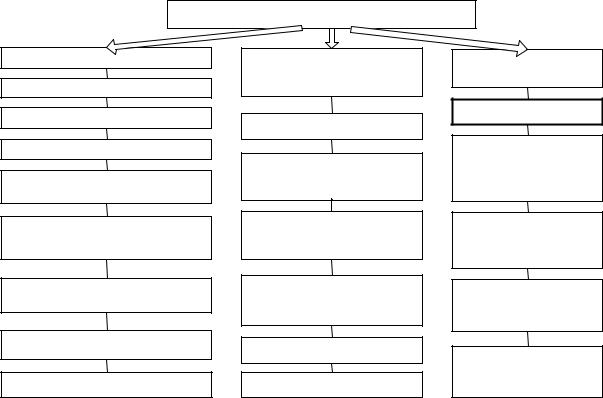
Federal Law on the Use of Atomic Energy
Objects of application of the Law
Types of activities
Ownership of NFs & NM
Federal regulations and rules
Powers of President, Government,
public authorities of RF
Rights of individuals to compensation of losses or damage caused by radiation
Federal authorities for management of nuclear energy uses
Monitoring of radiation conditions on the RF territory by the state
NM accounting and control by the state
Regulation of safety in nuclear energy uses by the state
NF siting and construction
Legal status of organizations involved in nuclear energy uses
Special conditions for building and operating watercraft
Special conditions for operating nuclear-powered space vehicles and aircraft
NM transportation
NM storage and processing
RW storage or disposal
Ph. protection of NM & NFs
Liability for losses or damage caused by radiation
Liability for violation of the Law on the Use of Atomic Energy
Export and import of NFs, NM, components and technologies
International agreements on nuclear energy uses
Fig. 5.1. Regulation of nuclear activities in accordance with the Law on the Use of Atomic Energy.
97
1. Practically all assets of the Russian nuclear industry are subject to this Law, including:
∙nuclear installations;
∙radiation sources, such as components and equipment containing radioactive material or generating ionizing radiation;
∙nuclear and radiation material storage sites, radioactive waste storage facilities; as well as
∙nuclear materials;
∙radioactive materials;
∙radioactive waste.
Considering the above, the Law on the Use of Atomic Energy appears to be all-embracing.
2. The Law regulates nuclear activities in various ways, depending on their nature. For any nuclear activities to be undertaken, they have to be licensed. Some activities are imposed by the Law as duties. This applies, first of all, to ensuring safety in nuclear energy uses. Other forms of activities are regulated using the notion of “right s”.
The Law imposes the following duties:
∙physical protection of nuclear installations;
∙accounting and control of nuclear and radioactive materials;
∙state-level monitoring of radiation conditions;
∙monitoring of nuclear, industrial and fire safety;
∙training of personnel.
The following activities are regulated by the Law:
∙siting, design, construction and operation of nuclear installations;
∙nuclear and radioactive material management, including its production, use, processing, transportation and storage;
∙research activities;
∙export and import of nuclear installations, components, technologies, nuclear materials.
Until recently, all nuclear materials, nuclear installations, radioactive material, radioactive waste, radiation sources, and storage facilities were owned by the state. The only action permitted was their transfer for use by legal entities with licenses for nuclear activities.
The basic legislative acts in force today have changed the terms of ownership pertaining to nuclear materials. To wit, Article 4 of Federal Law No. 13-FZ of February 5, 2007, says that the nuclear materials owned by the RF but being used by state unitary enterprises of the nuclear sector, may
98
be included in the assets of these enterprises, which are subject to privatization.
Therefore, nuclear materials may be owned either by the state or by open joint-stock companies.
3.Development of general federal regulations and rules is essential for nuclear energy uses in Russia. These regulations and rules set forth requirements for safe applications of nuclear energy. Their fulfillment is mandatory for all nuclear activities.
The procedure for elaboration of regulations and rules should provide for their preliminary publication by an official publishing house for the purpose of their broad discussion.
The rules and regulations should take into account recommendations of international organizations, such as the IAEA. They will appear in print for easier accessibility.
Such documents in force today are: the rules of nuclear and radiation safety, main rules for accounting and control of nuclear materials, rules for physical protection of nuclear installations and materials, etc.
4.The Law defines the rights of authorities, organizations and individuals in regard to nuclear energy uses.
With its appearance, individuals and organizations received some new rights, including the following.
The right to be informed. Organizations and individuals are entitled to request and receive information on the safety of nuclear facilities from relevant executive authorities. Individuals have the right to free information about radiation conditions.
The right to compensation of losses and damage. Individuals who have suffered losses or damage as a result of radiation impacts, have the right to be fully compensated for such losses or damage. Application of this right may be exemplified by the damages awarded after the Chernobyl accident.
The rights of individuals related to medical treatment. When taking medical treatment, an individual has the right to decide on or against use of ionizing radiation.
5.State control over nuclear energy uses is effected by management agencies specially authorized by the RF Government, such as the State Corporation Rosatom and others.
The terms of reference of these agencies include:
∙implementation of the national policy in scientific, technical, investment and organizational areas;
99
∙development and implementation of safety measures in nuclear energy uses;
∙development of regulations and rules;
∙accounting and control of nuclear materials by the state;
∙physical protection of nuclear installations, nuclear and radioactive materials, and their storage facilities;
∙monitoring of radiation conditions by the state;
∙development and implementation of programs for radioactive waste management, and other functions.
6.State-level monitoring of radiation conditions is aimed at early detection of changes in such conditions, at assessment, prediction and prevention of possible adverse effects of radiation on people and environment on the RF territory. The order of arranging and conducting such monitoring is determined by the RF Government. Every operating organization (Operator) that has nuclear and radioactive materials or radioactive waste is responsible for radiation monitoring in the control and surveillance areas. The National Nuclear Research University “Moscow Engineering and Physics Institute” (designated by t he Russian acronym MIFI), for instance, has its own radiation safety service, which monitors radiation conditions on the campus and in the surrounding areas.
7.As noted above, all efforts to ensure safe uses of nuclear energy are treated by the Law as mandatory activities. These include, for example, accounting and control of nuclear materials by the state aimed at determining the quantities of these materials in places of their location, at preventing their losses, unauthorized uses or theft, and at reporting these data to the authorities for safety management and regulation (Article 22). Nuclear materials are subject to accounting and control at the federal and departmental levels of the state A&C system.
In view of their importance, the Law treats separately the issues of safety regulation by the state relating to nuclear energy uses. Safety regulation at this level provides for activities of Rostekhnadzor – an agency specially appointed for this purpose by the government. Rostekhnadzor is responsible for safety regulation in all its aspects, including nuclear, radiation, industrial and fire safety. This authority is independent of all other state entities, as well as of the organizations whose activities relate to nuclear energy uses. Rostekhnadzor:
∙carries out licensing of activities pursued by various organizations;
∙takes part in development of regulations and rules for nuclear energy uses;
100