Материал: Крючков Фундаменталс оф Нуцлеар Материалс Пхысицал Протецтион 2011

Внимание! Если размещение файла нарушает Ваши авторские права, то обязательно сообщите нам

CHAPTER 4

GENERAL DESCRIPTION OF THE PPS SUBSYSTEMS

4.1. Engineered physical protection features

As mentioned above, a better understanding of a system is achieved through decomposing it. Separate systems are described below as subsystems of a system of engineered physical protection features (SEPPF) [1, 2].

Security alarm system

Essential to the construction and operation of the PPS is acquisition of information on the committed (attempted) unauthorized activity. This function is performed by detection sensors, which are part of the security alarm system (SAS).

A detection sensor is a device designed for automatic signal generation in the event of an unauthorized activity within its responsibility area.

A security alarm system is a combination of detection sensors, call alarms and the PPS data acquisition, handling and display system.

The following detection sensor classes may be identified. By conditions of application:

∙outdoor (perimeters, local areas);

∙indoor (buildings and rooms). By action:

∙electric-contact;

∙optical (including infrared);

∙capacitive;

∙inductive;

∙vibration;

∙seismic;

∙acoustic (including subsonic);

∙radio beam;

∙radar;

∙leaky-wave;

∙combined;

∙others.

The physical classification of detection sensors is based on interactions of the detection object (attacker) with different physical fields.

441

Essential to the SEPPF design are characteristics of its individual components, including detection sensors.

The following is normally chosen as the major detection sensor characteristics:

∙detection probability;

∙mean operating time to false response;

∙mean operating time to failure;

∙mean time to recovery;

∙cost.

Probability of detection is what determines the efficiency of the PPS as the whole.

Operating time to false response or frequency thereof is the performance characteristic defining to what extent the SEPPF causes nuisance to the guard personnel. Psychologically, an important point is also a decrease in confidence in signals and a lower level of alert as the result of frequent false alarms.

Operating time to failure and time to recovery are the robustness characteristics also determining the efficiency and operability of the SEPPF.

Cost is an important characteristic to be taken into account in the SEPPF design.

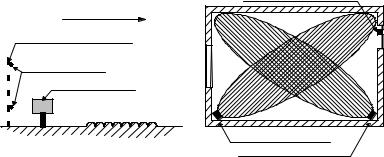
Fig. 4.1 presents simple examples of detection sensor applications on the NI site perimeter and inside the NI.


Electric-contact sensor

Into


Mesh fencing

Door

Vibration

Wind

Radio beam


EZ


Ultrasonic sensor


Radar sensor

a)

b)

Fig. 4.1. Examples of detection sensor applications: a) – on the NI perimeter; b)

– inside the NI.

442

The signals from the detection sensors installed for various NI applications (perimeter, outdoor, indoor) are sent over the communication lines to the physical protection system control panel (panels). The panel operators analyze the signals, after which the person responsible for decision-making chooses the algorithm for the response force actions to suppress the attackers and protect NM and the NF.

The combination of detection sensors, communication lines and control panels (that handle and display information from centers) forms the security alarm system.

Situation assessment subsystem

The false response problem leads us to thinking about how to raise the level of confidence in the DS response signals. One proven but outdated technique is the arrangement of exclusion zones (EZ) around the NI site on which the intruder’s traces will be left. Seals are used for indoor alarm acknowledgement.

A more recent alarm acknowledgement technique is application of video monitors and video surveillance systems (VSS).

All of the above features, both old and new, may be collectively viewed as a collection of situation assessment features and systems that improve reliability of primary data from detection sensors, as well as, in some cases (TV), make it possible to obtain more information on the intruder (number, intruder movement direction and so on) so that adequate countermeasures could be undertaken.

Seal designs are also improved (barcodes, optic seals, etc.).

Access control subsystem

The NI operations require authorized personnel and vehicle admission into the installation site and its separate areas, so each NI has a special subsystem established to identify “friends” (NI per sonnel, authorized visitors and so on) and “foes” (intruders) using a set of specific features.

Here are some of the definitions concerned with this.

Clearance: a duly issued permit for a person or a vehicle to enter any guarded area for the purpose of carrying out activities or receive any documents or data.

Access: realization of the possibility to stay in a guarded area, obtain information and documents, operate nuclear materials and so on.

443

One example of this subsystem’s element is a guard who performs the access-related functions. A recent trend is to use automatic devices instead of guards.

Essential elements of the access control system (ACS) are also devices that prevent prohibited items (weapons, explosives, nuclear material, etc.) from being taken into or out of the NI.

The access control system is a PPS subsystem that supports the NI protected area access control tasks.

To perform all these functions, external and internal access control points are established for the NI.

The access control systems and facilities are designed for the following applications:

∙external personnel access control points;

∙external vehicle and railway access control points;

∙internal personnel access control points;

∙entrances to restricted rooms;

∙storage rooms for physical protection articles (safes, etc.). Examples of personal identification techniques:

∙based on the features assigned:

coded pass; digital code;

∙ based on personal features: hand geometry;

eye structure; voice;

signature dynamics;

appearance (a computer photograph); others.

Examples of the ACS elements:

∙man traps for external (local area entrance) and internal access control points;

∙turnstiles at entrances to detached guarded areas;

∙door terminals for control of access to guarded rooms.

Also, access control points may include devices to prevent introduction of prohibited items as listed above.

The devices to be installed and the installation points thereof within the facility site are determined in the process of the PPS design.

Examples of the major ACS characteristics are as follows:
444

∙probability of detecting an admission procedure violation (identification features, etc.);

∙probability of a false detection of said violation;

∙mean operating time to failure;

∙mean time to recovery;

∙cost.

The first characteristic is what the efficiency of the PPS as the whole depends on.

The second characteristic determines the ACS maintainability. Of note is the ACS capability to regulate access to the installation’s separate guarded areas and segregate human and vehicle flows between these. The ACS ensures authorized access of personnel exactly to those areas they are permitted to enter.

The same can be said about the last three of the presented characteristics as with respect to detection sensors.

The ACS also has roles in countering insider actions.

Thanks to a great deal of capabilities opened up by advanced computer technology, a trend is observed towards integrating the ACS with security alarm systems and building integrated access control and security alarm systems (IACSAS).

Tendencies are also showing up towards integrating the PPS with NM accounting and control systems. The ACS is the major “interface” element in such integrated systems.

There are also other access control devices to consider in detail. These are, primarily, controlled locks that can be used in the ACS components, e.g. in cabins, or installed separately (door locks). In the latter case, these are to be logically viewed as controlled physical barriers to be described below.

Special communication system

A communication system is a facility for controlling the response force (RF) and ensuring communication within the NI and with the outside (relative to the installation): superior organizations, police stations, etc.

Regulatory documentation contains the requirement that there should be two communication channels (wire telephone and radio facilities).

Thanks to modern computer capabilities, it is possible to organize a communication network and control it in a flexible manner depending on the situation at hand.

445

Источник: https://studfile.net/preview/16708779/