Материал: Крючков Фундаменталс оф Нуцлеар Материалс Пхысицал Протецтион 2011
special physical barriers (sound-and-light, smoke-discharge, foaming, etc.).
There are also techniques of influencing the intruder (electric shock, gas discharge and others), though onsite uses of these are subject to authorization by respective law.
Response force
The response force (RF) is responsible for the ultimate suppression of the intruder actions. This means that the RF starts to act as information is received from facilities or the guard on duty about an attempted intrusion into the site or into some of its protected areas. The choice of the response tactics depends so on respective regulatory requirements and on the situation at hand.
The RF comprises several units, each of which is assigned to the task of its own. Thus, the alarm unit moves to the DS response point, the reinforcement unit heads for the site’s most vulnerable points to tighten security thereof and so on.
As will be shown below, time relations depend on the tactics chosen. Thus, we reduce Тrf by redeploying the RF and getting it closer the potential action points.
Organizational arrangements
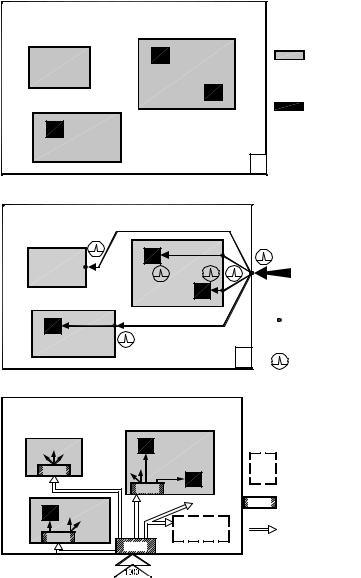
Lastly, it is very important that all PPS components act coherently. We shall dwell on how to build and operate the PPS below, when consideration will be given to design and optimization of physical protection systems. Now just a note should be made that the order should be kept within the installation in the course of the PPS operation as established earlier through organizational arrangements. These arrangements include:
∙NI personnel actions in standard and emergency situations;
∙interactions among the onsite PP-related services and of these with the “outside world” (municipal authorities, superior or ganizations and security agencies);
∙maintenance of engineered physical protection features.
The arrangements taken should be governed by regulations (bylaws, instructions, etc.). This makes the PPS operations less dependent on subjective factors. For example, where no regulatory documents exist, the decision in some situations will be made by an executive officer at the respective level, that is, the decisions taken will be much determined by his/her personal qualities. A hard and adamant security service leader will
447
|
Защищённая зона |
|
||
|
|
Protected area |
|
|
|
|
|
|
Внутренняя зона |
|
|
|
|
Inner area |
|
|
|
|
Особо важная зона |
|
|
|
|
Vital area |
|
|
|
a) |
|
|
Защищённая зона |
|
|
|
|
|
Protected area |
|
|
|
|
|
|
Нарушитель |
|
|
|
|
Intruder |
|
|
|
|
Engineered physical |
|
|
|
|
Инженерно-технические |
|
|
|
|
средства физической |
|
|
|
|
protection features |
|
|
b) |
|
защиты |
|
|
|
Сигнал тревоги |
|
|
|
|
|
Alarm |
|
Защищённая зона |
|
|
|
|
Protected area |
|
|
|
250 |
|
|
|
Administrative |
|
20 |
|
|
|
|
|
|
Административное |
|
ÊÏ Ï |
200 |
30 |
|
здание |
250 |
ÊÏ Ï |
|
|
building |
|
|
|
Контрольно-пропускной |
|
|
|
|
|
|
|
250 |
100 |
ÊÏ Ï Access control point |
|
175 |
|
|
|
пункт |
|
|
|
Personnel flow |
|
25 |
200 |
|
|
|
|
30 |
Поток персонала |
||
|
|
|
||
ÊÏ Ï |
ÊÏ Ï |
|
|
|
200 |
|
|
|
|
NI personnel |
c) |
Персонал ЯО |
|
Fig. 5.1. PPS zoning principle: a) – guarded areas;
b) – defense-in-depth barriers; c) – differentiated personnel access to guarded areas
450