Материал: Uchebnik_dlya_sud_expertov
9. % ! . !",
. . - ,
#' $
!'. (Professor – Student. Boss – Employee, Mother – Daughter, Legal Adviser –
Client).
1. |
You reap what you sow. |
a. You created a big problem |
2. |
Don’t beat about the bush. |
b. I am miserable now but I know I will be |
|
|
happy |
3. |
Never let your guard down. |
c. I really need to get rid of my anger |
4. |
A little bird told me. |
d. You get what you deserve |
5. |
You really opened a can of worms. |
e. Always pay attention, don’t lose the focus |
6. |
Steam when you heat water. |
f. Stop wasting my time. You are trying to |
|
|
avoid answering my queries |
7. |
That is not my cup of tea. |
g. I don’t want to reveal the source of informa- |
|
|
tion |
8. |
There is a light at the end of the tunnel. |
h. It is not my style |
10. ' #'
: !, ( ), , !, , -
, , . , ! -
. ( ,
! ).
c |
o |
p |
k |
y |
|
|
|
|
|
|
|
|
|
|
u |
y |
u |
t |
a |
|
|
|
|
|
|
|
|
|
|
s |
h |
i |
c |
y |
|
|
|
|
|
|
|
|
|
|
t |
w |
l |
e |
t |
|
|
|
|
|
|
|
|
|
|
o |
p |
p |
p |
l |
|
|
|
|
|
f
 q
q 
 v
v 
 s
s 
 a
a
f
 e
e 
 c
c 
 e
e 
 n
n
e |
i |
i |
r |
e |
|
|
|
|
|
|
|
|
|
|
n |
u |
t |
o |
p |
|
|
|
|
|
|
|
|
|
|
d |
d |
i |
x |
o |
|
|
|
|
|
|
|
|
|
|
a |
c |
q |
u |
a |
|
|
|
|
|
|
|
|
|
|
l |
s |
e |
g |
e |
|
|
|
|
|
t |
a |
m |
u |
t |
a |
m |
a |
q |
c |
e |
i |
|
|
|
|
|
|
|
|
|
|
|
|
|
|
|
|
|
|
|
|
|
|
|
|
s |
c |
e |
r |
p |
w |
h |
|
v |
j |
k |
n |
|
|
|
|
|
|
|
|
|
|
|
|
|
|
|
|
|
|
|
|
|
|
|
|
a |
q |
t |
e |
c |
p |
a |
t |
i |
e |
n |
t |
|
|
|
|
|
|
|
|
|
|
|
|
|
|
|
|
|
|
|
|
|
|
|
|
a |
u |
a |
b |
t |
c |
b |
e |
t |
s |
e |
e |
|
|
|
|
|
|
|
|
|
|
|
|
|
|
|
|
|
|
|
|
|
|
|
|
a |
a |
p |
i |
a |
t |
i |
n |
u |
t |
s |
n |
|
|
|
|
|
|
|
|
|
|
|
|
|
|
|
|
|
|
|
|
|
|
|
|
n |
i |
h |
r |
t |
f |
t |
o |
b |
o |
a |
t |
|
|
|
|
|
|
|
|
|
|
|
|
|
|
|
|
|
|
|
|
|
|
|
|
q |
h |
o |
s |
t |
i |
l |
e |
s |
b |
r |
h |
|
|
|
|
|
|
|
|
|
|
|
|
|
|
|
|
|
|
|
|
|
|
|
|
w |
a |
r |
s |
e |
m |
a |
e |
d |
l |
a |
w |
|
|
|
|
|
|
|
|
|
|
|
|
|
|
|
|
|
|
|
|
|
|
|
|
d |
n |
h |
e |
m |
p |
f |
n |
b |
n |
q |
m |
|
|
|
|
|
|
|
|
|
|
|
|
|
|
|
|
|
|
|
|
|
|
|
|
s |
a |
a |
d |
s |
a |
o |
a |
l |
b |
a |
i |
|
|
|
|
|
|
|
|
|
|
|
|
|
|
|
|
|
|
|
|
|
|
|
|
i |
n |
t |
a |
n |
c |
e |
e |
u |
p |
p |
l |
|
|
|
|
|
|
|
|
|
|
|
|
|
|
|
|
|
|
|
|
|
|
|
|
|
p |
x |
j |
f |
w |
e |
s |
o |
c |
i |
e |
|
|
|
|
|
|
|
|
|
|
|
|
71

11. % ! . . -
!' , – $ . -
.
Promt: General questions (yes-no).
Special questions (Wh-).
Alternative questions (or).
Tag questions (__, is it?).
Culture is a group which shapes a person’s values and identity. Cultural conflicts arise because of the differences in values and norms of behavior of people from different cultures. A person acts according to the values and norms of his or her culture; another person holding a different worldview might interpret his or her behavior from the opposite standpoint. Situation creates misunderstanding and can lead to conflict.
The following case exemplifies how unintentionally one cultural group can hurt the feelings of the other. The city of Kenai, Alaska was planning a celebration of 200 years since the first Russian fur traders came to the region. A Native Indian tribe which lived in Alaska for a thousand years was offended by the implication that before the Russians came to the region there was no civilization there. As a result the celebration turned to a year-long event and Native Indian culture became its basis.
People can prevent cross-cultural conflicts by learning about cultures that they come in contact with.
12. ( +- -
, # #, ' $ -
. ( ! ).
National Stereotypes
In heaven, the cops are British, the lovers are French, the food is Italian, the cars are German, and the whole thing is run by the Swiss.
In hell, the cops are German, the lovers are Swiss, the food is British, the cars are French, and the whole thing is run by the Italians.
—Traditional joke.
The happiest man on earth lives in a British house, gets an American salary, has a Chinese wife, and eats Japanese food.
The saddest man on earth lives in a Japanese house, gets a Chinese salary, has an American wife, and eats British food.
—Another traditional joke.
Britons - ceremoniously polite, address others using personal names, snobbish__________
____________________________________________________________________________
Americans - like to use slang words, forced smile, chewing gum, large cars _______________
___________________________________________________________________________
72

Germans - love details, observe time, highly organized_______________________________
Italians – noisy, gossipy neighbours, enjoy cooking _________________________________
Japanese –extremely polite, intelligent, and obedient but dislike foreigners ________________
Russians –love chess and ballet, open-hearted, hospitable, _____________________________
13. ! – «* ». (Round Table Discussion. The way members are seated in relation to each other significantly affects group interaction. Arrangements that bring people closer together and permit direct eye-contact among all members promote group interaction).
Topic: How can we overcome stereotypical and subjective characterizations of different nations?
$ , & " -, %. $ "&,$ ). $"$ & " & " .
Preparation is essential for an effective presentation.
When giving a presentation, certain keywords are used to signpost the different stages.
It's a good idea to memorize them and practise using them, so that they come to mind easily during a presentation.
• Good morning/good afternoon ladies and gentlemen
►Starting the presentation •The topic of my presentation today is ...
• What I'm going to talk about today is ...
►Why you are giving this presen- •The purpose of this presentation is ...
tation •This is important because ...
• My objective is to ...
•The main points I will be talking about are
►Stating the main points
firstly ...
secondly...
next, finally... we're going to look at ...
►Introducing the first point |
...• Let's start/begin with |
|
|
►Showing graphics, transparen-
cies, slides etc.
• I'd like to illustrate this by showing you...
►Moving on to the next point |
...• Now let's move on to |
|
|
• I'd like to expand on this aspect/problem/point
►Giving more details • Let me elaborate on that
• Would you like me to expand on/elaborate on that?
►Changing to a different topic |
• I'd like to turn to something completely different |
|
|
►Referring to something which is • I'd like to digress here for a moment and just mention that ...
off the topic
►Referring back to an earlier
point
• Let me go back to what I said earlier about ...
73

|
• I'd like to recap the main points of my presentation |
|
►Summarizing or repeating the |
- first I covered |
|
- then we talked about |
|
|
main points |
|
|
- finally we looked at |
|
|
|
|
|
|
• I'd now like to sum up the main points which were: |
|
|
|
|
►Conclusion |
• I'm going to conclude by... saying that/inviting you to/ quoting ... |
|
• In conclusion, let me... leave you with this thought/invite you to |
|
|
|
|
|
|
|
|
|
• Finally, I'll be happy to answer your questions. |
|
►Questions |
• Now I'd like to invite any questions you may have. |
|
|
• Do you have any questions? |
|
|
|
|
UNIT 4. NON-VERBAL BEHAVIOUR IN CROSS-CULTURAL COMMUNICATION
1..
1.What springs to mind when you hear the word ‘culture’?
2.Do you think different cultures have different emotions?
3.Are you good at reading people’s facial expressions?
4.Do you think people’s facial expressions are the same all over the world?
5.Are you good at hiding your true feelings?
6.Do you think it would be interesting to research facial expressions?
7.What do you think is the most expressive part of someone’s face?
8.Why do you think a particular culture would focus more on the eyes or mouth?
2., # $ #, #' - $ ()), $ , !
(().
“The most important thing in communication is to hear what isn't being said.”
~ Peter F. Drucker
A
Happiness - A smile, quite an obvious one, however, if there is no wrinkling, increase in puffiness or general muscle movement around the eyes, the person is faking the smile.
Sadness - Eyebrows up, lips down-turned. Eyebrows up can also mean the person is feeling guilty.
Contempt - One corner of the mouth rises, like a sort of 'half-smile'. In extreme contempt, the person's mouth shifts over in an odd way.
Disgust - The top lip is raised, showing the teeth in extreme cases, like a scorn.
Surprise - Gaping mouth with eyebrows raised. If this expression lasts longer than a second, the person is faking it.
Fear - Eyebrows raised and lower part of the mouth lowered in extreme cases. Swallowing also indicates fear.
Anger - Lips tightened, flaring nostrils, eyebrows pulled down and together are all signs of anger.
74
B
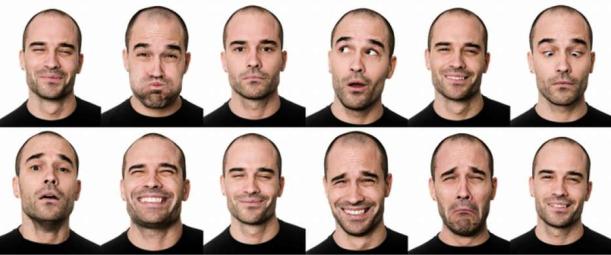
He says:
1.“I’m happy”.
2.“I’m so sorry”.
3.“I’ m so angry”.
4.“Why so? It’s very strange”.
5.“Wow!!!”
6.“Police! Help me!”
7.“I’m so hungry”.
8.“Excuse me, please. Can you show me the way to…”
9.“I’m so sorry, forgive me, please”.
10.“Mmmmm. What is it?”
11.“You?!... Here again!”
12."Aha!"
3.& $ # $ . * # -
(() ! ?
Can you guess his facial expression?
He can be afraid, happy, sad, angry, interested, ashamed, disgusted, surprised, unsatisfied, shocked, distrustful, excited, playful, sick, insecure, cheerful, panic, silly, confused.
4. .
TEXT
NON-VERBAL BEHAVIOUR
Among the most markedly varying dimensions of intercultural communication is non-verbal behaviour. Knowledge of a culture conveyed through what a person says represents only a portion of what that person has communicated. Much of non-verbal communication may be broken down into six areas: dress; kinesics*, or body-language; eye contact; haptics**, or touching behaviour; the use of body space; and paralanguage including emotion and speaking style as well as rhythm,
75