Материал: The_Future_of_Hydrogen-IEA-2020

The Future of Hydrogen |
Chapter 2: Producing hydrogen and hydrogen-based products |
Box 4. Thermal routes for hydrogen production – a case for nuclear?
Heat can be used in various ways in the production of hydrogen. Heat in form of steam is required in the process of steam methane reforming. The electricity consumption of water electrolysis can be reduced by not electrolysing liquid water, but steam, so shifting part of the required energy for the electrolysis from electrical to thermal energy. SOEC is an example of such a high-temperature electrolysis. This means that there is a lot of interest in the scope for integrating heat into hydrogen production and how best to source heat requirements. Potential opportunities exist for places where low-cost heat is available, whether this comes from sources such as waste heat from industrial processes, or from geothermal or solar heat in regions with good resources.
Nuclear power plants are another option for the provision of heat for hydrogen production. They could, for example, provide steam for natural gas-based steam methane reforming. Depending on local conditions, using steam from nuclear power could be cheaper than using steam from natural gas, as well as reducing the carbon intensity of the hydrogen produced. It could also provide a useful additional revenue stream for nuclear power plants.
Electricity and heat (produced at temperature levels of around 300°C by nuclear power plants) could also be used to provide electricity and steam for SOEC electrolysis. Research is underway to develop materials for SOEC electrolysis that are well suited to the temperature levels of nuclear energy heat sources (US-DOE, 2018).
Small modular reactors could also have a role to play in SOEC electrolysis in the future. Six small modular reactors with a combined capacity of 300 MWe could, for example, meet the annual hydrogen demand of a mid-sized ammonia plant (73 000 tonnes of hydrogen per year [tH2/yr]). Exploring non-electric applications for small modular reactors, such as hydrogen, is part of the Joint Use Modular Plant (JUMP) research programme in the United States.
In the longer term, advanced nuclear reactors, such as the two industrial prototype hightemperature pebble-bed reactors currently being constructed in China, could also become the heat source for thermochemical water splitting, with some reactor designs having coolant outlet temperatures of 800–1 000°C.
Source: US-DOE (2018), “Energy Department announces up to $3.5m for nuclear-compatible hydrogen production”.
Costs of hydrogen production from water and electricity
The production costs of hydrogen from water electrolysis are influenced by various technical and economic factors, with CAPEX requirements, conversion efficiency, electricity costs and annual operating hours being the most important.
CAPEX requirements are today in the range of USD 500–1 400/kWe for alkaline electrolysers and USD 1 100–1 800/kWe for PEM electrolysers, while estimates for SOEC electrolysers range across USD 2 800–5 600/kWe (Table 3). The electrolyser stack is responsible for 50% and 60% of the CAPEX costs of alkaline and PEM electrolysers respectively. The power electronics, gas-conditioning and plant components account for most of the rest of the costs.
Future cost reductions will be influenced by innovations in the technologies themselves, (for example the development of less costly materials for electrodes and membranes), and by economies
PAGE | 46
IEA. All rights reserved.
The Future of Hydrogen |
Chapter 2: Producing hydrogen and hydrogen-based products |
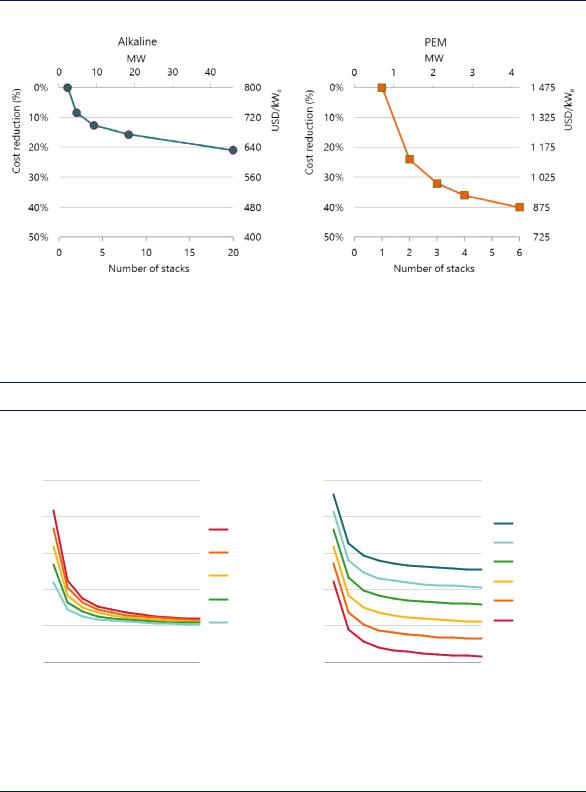
of scale in the manufacturing processes (for example by the development of larger electrolysers). Figure 11 illustrates the potential for cost reduction in current alkaline and PEM electrolysers from switching to larger multi-stack systems (combining several electrolyser stacks to increase the overall capacity of the electrolyser system).
Figure 11. Expected reduction in electrolyser CAPEX from the use of multi-stack systems
Notes: Based on a single stack size of 2 MW for alkaline electrolysis and 0.7 MW for PEM electrolysis.
Source: Based on analysis supported by Task 38 of the IEA Hydrogen Technology Collaboration Programme and published in Proost (2018), “State-of-the art CAPEX data for water electrolysers, and their impact on renewable hydrogen price settings”.
Scaled-up electrolysers and automated production processes are leading to significant CAPEX reductions.
Figure 12. Future levelised cost of hydrogen production by operating hour for different electrolyser investment costs (left) and electricity costs (right)
|
|
Electricity price USD 40/MWh |
|
|
CAPEX USD 450/kWₑ |
|
|||||
2 |
10 |
|
|
|
|
|
10 |
|
|
|
|
USD/kgH |
8 |
|
|
|
|
USD 650/kWₑ |
8 |
|
|
|
|
|
|
|
|
|
|
|
|
|
|||
|
|
|
|
|
|
|
|
|
|
|
|
|
6 |
|
|
|
|
USD 550/kWₑ |
6 |
|
|
|
|
|
|
|
|
|
|
USD 450/kWₑ |
|
|
|
|
|
|
4 |
|
|
|
|
USD 350/kWₑ |
4 |
|
|
|
|
|
2 |
|
|
|
|
USD 250/kWₑ |
2 |
|
|
|
|
|
0 |
|
|
|
|
|
0 |
|
|
|
|
|
0 |
2 000 |
4 000 |
6 000 |
8 000 |
|
0 |
2 000 |
4 000 |
6 000 |
8 000 |
|
|
Full load hours |
|
|
|
Full load hours |
|
||||
Notes: MWh = megawatt hour. Based on an electrolyser efficiency of 69% (LHV) and a discount rate of 8%.
Source: IEA 2019. All rights reserved.
USD 100/MWh USD 80/MWh USD 60/MWh USD 40/MWh USD 20/MWh USD 0/MWh
With increasing full load hours, the impact of CAPEX on hydrogen costs declines and the electricity becomes the main cost component for water electrolysis.
PAGE | 47
IEA. All rights reserved.
The Future of Hydrogen |
Chapter 2: Producing hydrogen and hydrogen-based products |
As electrolyser operating hours increase, the impact of CAPEX costs on the levelised cost of hydrogen declines and the impact of electricity costs rises (Figure 12). Low-cost electricity available at a level to ensure the electrolyser can operate at relatively high full load hours is therefore essential for the production of low-cost hydrogen.10
In electricity systems with increasing shares of variable renewables, surplus electricity may be available at low cost. Producing hydrogen through electrolysis and storing the hydrogen for later use could be one way to take advantage of this surplus electricity, but if surplus electricity is only available on an occasional basis it is unlikely to make sense to rely on it to keep costs down. Running the electrolyser at high full load hours and paying for the additional electricity can actually be cheaper than just relying on surplus electricity with low full load hours.
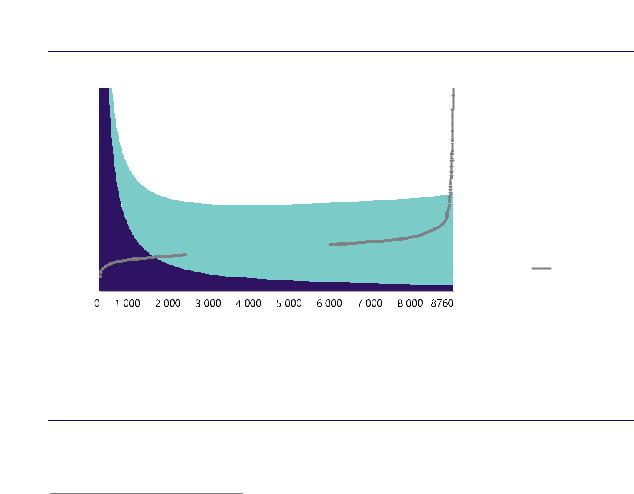
The relationship between electricity costs and operating hours becomes apparent when looking at electrolysers that use grid electricity for hydrogen production (Figure 13). Very low-cost electricity is generally available only for a very few hours within a year, which implies a low utilisation of the electrolyser and high hydrogen costs that reflect CAPEX costs. With increasing hours, electricity costs increase, but the higher utilisation of the electrolyser leads to a decline in the cost of producing a unit of hydrogen up to an optimum level at around 3 000–6 000 equivalent full load hours. Beyond that, higher electricity prices during peak hours lead to an
Figure
2 |
20 |
|
|
|
|
|
800 |
USD/MWh |
||
|
|
|
|
|
||||||
USD/kgH |
15 |
|
|
|
|
|
600 |
|||
|
|
|
|
|
|
|||||
|
|
|
|
|
|
|
|
|
||
|
|
|
|
|
|
|
|
Hydrogen costs from: |
||
|
|
|
|
Area of lowest |
|
|
|
|||
|
|
|
|
|
|
|
|
|
|
|
|
10 |
|
|
hydrogen costs |
|
|
400 |
|
|
Electricity use |
|
|
|
|
|
|
|
|
|||
|
|
|
|
|
|
|
|
|||
|
|
|
|
|
|
|
|
|||
|
5 |
|
|
|
|
|
200 |
|
|
CAPEX+OPEX |
|
|
|
|
|
|
|
|
|||
|
|
|
|
|
|
|
|
|||
|
|
|
|
|
|
|
|
|||
|
|
|
|
|
|
|
|
Electricity price |
||
|
|
|
|
|
|
|
|
|||
|
|
|
|
|
|
|
|
|
|
|
|
0 |
|
|
|
|
|
0 |
|
|
(right axis) |
|
|
|
Full load hours |
|
|
|
|
|||
|
|
|
|
|
|
|
|
|
||
Notes: |
|
|
|
|
|
|
|
|
||
Source: |
|
|
|
|
|
Trading Results 2018. |
||||
Higher utilisation |
|
reduce |
CAPEX, |
-connected electrolysers this |
||||||
means higher electricity prices; the lowest hydrogen costs are achieved in mid-load operation.
10 Full load hours are an indicator of the annual utilisation of an electrolyser. Full load hours represent the number of hours within a year the electrolyser would have to run at its design capacity, i.e. at “full load”, to achieve a certain annual output. Full load hours of 8 760 h represent the maximum possible utilisation, meaning that the electrolyser would be running for all hours within a year at its design capacity. From given full load hours and electrolyser capacity, the annual hydrogen production can be calculated (taking into account the conversion efficiency, as the electrolyser capacity is typically measured in electricity input terms).
PAGE | 48
IEA. All rights reserved.
The Future of Hydrogen |
Chapter 2: Producing hydrogen and hydrogen-based products |
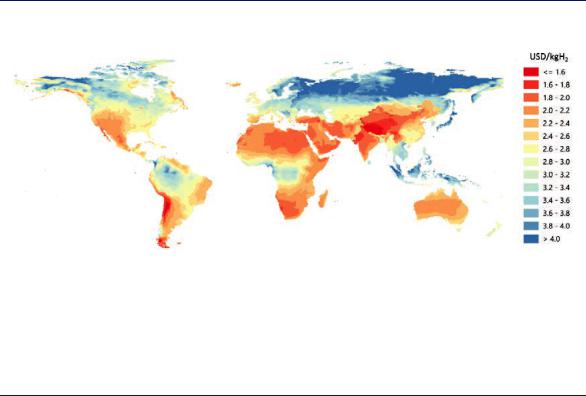
Dedicated electricity generation from renewables or nuclear power offers an alternative to the use of grid electricity for hydrogen production. With declining costs for solar PV and wind generation, building electrolysers at locations with excellent renewable resource conditions could become a low-cost supply option for hydrogen, even after taking into account the transmission and distribution costs of transporting hydrogen from (often remote) renewables locations to the end users, as discussed in Chapter 3.
Promising areas exist, for example, in Patagonia, New Zealand, Northern Africa, the Middle East, Mongolia, most of Australia, and parts of China and the United States (Figure 14). The Asian Renewable Energy Hub project site in Western Australia aims to build 7.5 gigawatts (GW) of wind generation and 3.5 GW of solar generation, with around 8 GW of the generation being dedicated to hydrogen production for domestic use and for export (Asian Renewable Energy Hub, 2019). Several other projects to produce hydrogen from dedicated renewable resources in various parts of the world are in preparation or have been announced. In areas where both resources are excellent, combining solar PV and onshore wind in a hybrid plant has the potential to lower costs further.
Figure 14. Hydrogen costs from hybrid solar PV and onshore wind systems in the long term
Notes: This map is without prejudice to the status of or sovereignty over any territory, to the delimitation of international frontiers and boundaries and to the name of any territory, city or area. Electrolyser CAPEX = USD 450/kWe, efficiency (LHV) = 74%; solar PV CAPEX and onshore wind CAPEX = between USD 400–1 000/kW and USD 900–2 500/kW depending on the region; discount rate = 8%.
Source: IEA analysis based on wind data from Rife et al. (2014), NCAR Global Climate Four-Dimensional Data Assimilation (CFDDA) Hourly 40 km Reanalysis and solar data from renewables.ninja (2019).
The declining costs of solar PV and wind could make them a low-cost source for hydrogen production in regions with favourable resource conditions.
Hydrogen from coal
Hydrogen production from coal using gasification is a well-established technology, used for many decades by the chemical and fertiliser industries for the production of ammonia (especially in China). Globally around 130 coal gasification plants in operation, more than 80% of which are in China. Hydrogen production using coal produces CO2 emissions of about 19 tCO2/tH2, which is twice as much as natural gas.
PAGE | 49
IEA. All rights reserved.
The Future of Hydrogen |
Chapter 2: Producing hydrogen and hydrogen-based products |
Technology options
The high CO2 emissions intensity of coal-based hydrogen means that carbon capture technology will need to be used if hydrogen from coal is to have a future in a low-carbon energy system. The use of CCUS brings some challenges: coal produces hydrogen with a relatively low hydrogen-to-carbon ratio (hydrogen to carbon ratio 0f 0.1:1 from coal vs. 4:1 from methane) and brings with it a high level of impurities in the feedstock (sulphur, nitrogen and minerals) (Muradov, 2017).
The synthesis gas obtained from the gasification of coal could be used to fuel a combinedcycle power plant and – assuming the coal gasification plant was equipped with CCUS – the electricity it generated would count as low carbon. If an additional water-gas-shift (WGS) unit could be added, the synthesis gas could also be used to produce more hydrogen, allowing the coal gasification plant to shift between the production of electricity and hydrogen according to which is more profitable. Currently, however, there are no largescale commercial units producing both hydrogen and electricity.
The performance of individual CO2 capture technologies and methods for integrating them differ in terms of CO2 removal rate as well as hydrogen and CO2 purity levels. Hydrogen purity requirements vary strongly by end-use application. While most fuel cells require high purity levels, lower levels suffice for gas turbines, refinery processes and industrial boilers. Few technologies exist that produce both high-purity hydrogen and CO2 that is pure enough for other uses or storage, since gas separation technologies focus on either hydrogen removal or CO2 removal. The optimal combination of hydrogen production route and capture technology therefore depends on what the hydrogen is going to be used for, as well as on the production costs.
The vast majority of hydrogen production from coal currently takes place in China using coal gasification, mainly to produce ammonia. China is exploring the role of hydrogen in its economy, and using coal is currently the cheapest way of producing it, with costs amounting to RMB 0.6–0.7/m3 (about USD 1/kgH2). CHN Energy, China’s largest power company, is also the world's largest hydrogen production company. Its 80 coal gasifiers can produce around 8 MtH2/yr, which is equivalent to 12% of global dedicated hydrogen production today. Using coal with CCUS currently looks likely to be the lowest-cost way of producing cleaner hydrogen in China, but current technologies enable a CO2 intensity only as low as 2 kilograms of carbon dioxide per kilogram of hydrogen (kgCO2/kgH2) while advanced technologies may permit this to reach as low as 0.4 kgCO2/kgH2 (Figure 15).
In Australia the Hydrogen Energy Supply Chain (HESC) Latrobe Valley project is seeking to produce hydrogen from lignite using high-pressure partial oxidation. The related CarbonNet Carbon Capture and Storage Project presents a potential solution for mitigating CO2 separated from the hydrogen production process in the commercial phase. The hydrogen produced would be liquefied and exported to Japan. The first step is a one-year pilot project to treat 160 tonnes of lignite to produce 3 tH2.
Costs of hydrogen production from coal
CAPEX requirements account for around 50% of the cost of producing hydrogen from coal, and fuel accounts for a further 15–20% (Figure 15). The availability and cost of coal therefore plays an important role in determining the viability of coal-based hydrogen projects.
PAGE | 50
IEA. All rights reserved.