Материал: Uchebnik_dlya_sud_expertov
Внимание! Если размещение файла нарушает Ваши авторские права, то обязательно сообщите нам

.

5. ' & , & $ % $, .

6. ( , , $, # #, ,, .

16. % ! . ( . !$ ,

#' # ! . ! !$ , , #

.

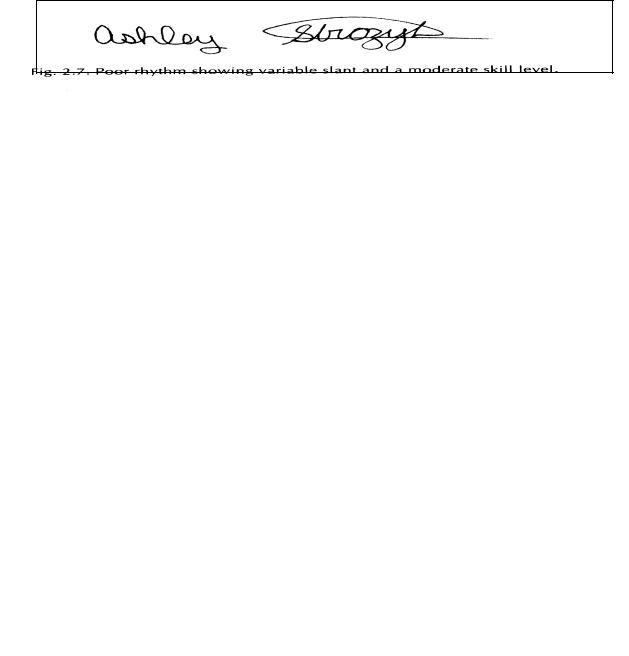
handwriting sample, skilled writing, a poor writer, pen scope, a stroke, a slant, proportion, line quality, speed, connecting strokes (ligatures), the rhythm of the writing

Model: - I think the handwriting sample in figure 2.2. is accomplished by a poor writer.

-Why do think so?

-I think so because there are no connected strokes and ……..

UNIT 3. FORENSIC DOCUMENT EXAMINATION

1. . .

311

1.Why is there a need for questioned document examination (QDE)?

2.What physical traces can assist to the forensic document examiner?

3.How can the forensic document examiner investigate handwriting/typing?

4.What types of documents are usually disputed?

5.How many stages are there in the process of examination? Name them.

6.What optional stage may be used by the examiner?

7.How has the work of the forensic document examiner been simplified nowadays?

TEXT

FORENSIC DOCUMENT EXAMINATION

Document Examination, as an established field of scientific study, came into being early in the 20th century as a means of identifying forgery and establishing the authenticity of documents in dispute. It grew out of the need of the Court to be able to correctly evaluate document evidence.

The examination of questioned documents relies on the scientific study of the physical evidence of a document. Physical traces that assist in the questioned document (QD) examination to uncover the history of a document are left in a number of ways: the writing instrument, i.e. pen and ink, pencil, typewriter, computer and printer, etc., the writing surface, such as paper, and information about the writer (or typist), such as physical position and physical, emotional, or mental state. For handwriting, the forensic document examiner observes various features: letter size, formation, and relative proportions, and letter slant, spacing, pressure, line quality, connecting strokes, etc. For typing, the document examiner observes characteristics of the typeface, font style, spacing between letters and lines, and association of a document with a particular machine or type of machine, i.e., typewriter, printer, or copier.

Common criminal charges involved in a document examination case include identity theft, forgery, counterfeiting, fraud, or uttering a forged document. A questioned document may be a sheet of paper bearing handwriting or mechanically-produced text such as a ransom note, a forged cheque or a business contract. It also includes things like graffiti on a wall, stamp impressions on meat products, or covert markings hidden in a written letter, among other things.

The most common type of examination involves handwriting. Handwriting identification is based on the principle: there are individual features that distinguish one person's writing from that of another. Generally, there are three stages in the process of examination:

Analysis: The questioned and the known items are analyzed and broken down to directly perceptible characteristics.

Comparison: The characteristics of the questioned item are then compared against the known standard.

Evaluation: Similarities and/or differences in the compared properties are evaluated and this determines which ones are valuable for a conclusion. This depends on the uniqueness and frequency of occurrence in the items.

Optionally, the procedure may involve a fourth step consisting of verification/validation or peer review.

Modern day questioned document problems are becoming more complex. Fortunately with the advent of specialized photographic techniques, computer-based systems for image enhancement, and recent developments in relative ink and paper dating by forensic chemists, the arsenal of analytical tools continues to expand with more conclusive determinations being made by the competent expert who is familiar with their proper applications and uses.

2. -

.

312

1. to come into being

a. $ $

2. to identify forgery

b.

&

3. to establish the authenticity

c. $

4. to evaluate document evidence correctly

d.


5. to uncover the history of a document

e. $

6. uniqueness

f. $ $


$

7. frequency of occurrence

g. $ $

8. systems for image enhancement

h.

$

3. .

1.The examination of questioned documents relies on the scientific study of the physical evidence of a document.

2.Physical traces that assist in the questioned document examination are left in a number of ways.

3.For typing the forensic document examiner observes various features: letter size, formation, and relative proportions, and letter slant, spacing, pressure, line quality, and connecting strokes.

4.For handwriting the document examiner observes characteristics of the typeface, font style, spacing between letters and lines.

5.A questioned document doesn’t imply a sheet of paper bearing handwriting or mechanicallyproduced text such as a ransom note, a forged cheque or a business contract.

6.The most common type of examination involves handwriting.

7.The process of examination usually includes three stages.

8.They are analysis, comparison and verification.

4. . .

.

1.Handwriting identification is based on some principles.

2.The questioned and known items are analyzed and broken down to directly perceptible characteristics.

3.The characteristics of the questioned item are then compared against the known standard.

4.Similarities and/or differences in the compared properties are evaluated by forensic document examiners.

5.+ , ' , . (( -

).

1.They have given Bishop Tutu the Nobel Prize.

2.The police allege that Simpson robbed three banks last year.

3.The company says that the production figures have fallen short of expectation.

4.The police have given everyone two weeks to surrender any guns which they may possess illegally.

5.They say he was cleaning his pistol and carelessness caused his death.

6.Evidence shows that Jackson was inside the house at the time of murder.

7.Please, don’t come to the station with me. I hate people saying goodbye to me through the window of a train.

8.They say the Princess is staying at the Hilton.

6. ( , #' , &-

) .

313

1.documents in dispute, a means of, the authenticity of, is, Document Examination, and, identifying forgery, establishing.

2.are, the information, physical traces, the writing instruments, the writer, assist, the history of a document, about, and, the writing surface, that, to uncover.

3.graffiti on a wall, may, a sheet of paper, be, forged cheque, etc., a questioned document, a ransom note.

4.the principle, individual features, handwriting identification, one person's writing, based on, from, is, distinguish, that, that of another, there are.

5.in the process of, stages, there, analysis, three, evaluation, generally, comparison, are, examination, and.

6.consisting of, the procedure, a fourth step, optionally, may, verification/validation, involve, peer review, or.

7.+ $# , .

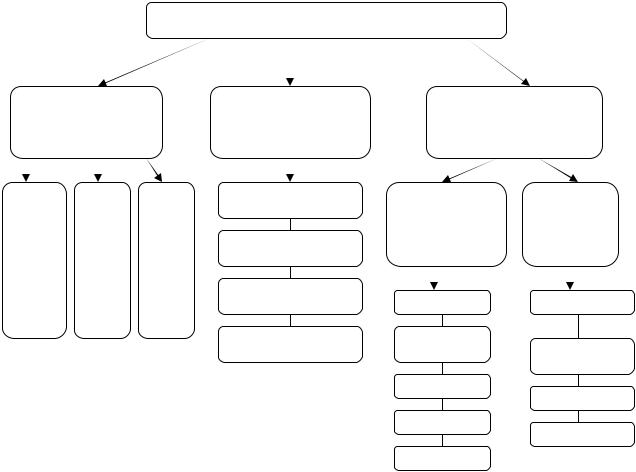
FORENSIC DOCUMENT EXAMINATION

HISTORY OF

FORMS OF QD

HANDWRITNG

QD


EXAMINATION

FEATURES

PEN

and

INK

graffiti on a wall

letter slant

Comparison

8. + $# , & $# .

314

UNIT 4. GRAPHOLOGY VS. FORENSIC DOCUMENT EXAMINATION

1. .

TEXT

GRAPHOLOGISTS VS. FORENSIC DOCUMENT EXAMINERS

Generally, two categories of individuals are located during inquiries for questioned document examiners. These are Graphologists and Forensic Document Examiners. Although a forensic document examiner is not to be confused with a graphologist, and vice versa.

In the strict sense, graphologists claim to be capable of interpreting the character or personality of the writer by supposed traits left behind in the written line. They do not, by definition, compare handwriting to determine authorship or genuineness of the document.

Graphology is the study and analysis of handwriting especially in relation to human psychology. The activity dates back many centuries, having originally (as far as we can tell) been taken from Southern India to China and from there to Greece, circa 2,000 BC. Aristotle claimed that he could define a person’s soul from studying his handwriting. The Roman historian Suetonius claimed that Emperor Augustus did not separate his words which led him to conclude that the Emperor did not pay attention to detail in forming a picture of the whole situation. In 1870 French monk named Jean Hippolyte Michon coined the phrase "Graphology" (from the Greek: "Graph" meaning, 'To write' or 'I write', and "Logos" meaning 'doctrine' or 'theory'), believed the brain, and not the hand, controlled handwriting. He broke handwriting down into a series of strokes, assigning a personality trait to each stroke.

Those who specialize in graphology, the practice of handwriting analysis, believe your penmanship harbours more than the power of self-expression; they believe it bears the unique imprint of your personality. Handwriting reveals hundreds of elements of the person's "personality and character" which includes glimpses into the subconscious mind, intellect, energy, fears, motivations, imagination, integrity, aptitudes, etc.

For instance, pressure indicates the capacity for vigorous activities. The slant indicates the writer's emotional response to external forces. Most of us write average size, indicating an average ability to concentrate. We have to force ourselves to concentrate on minor details, especially for long periods of time.

Handwriting analysis or study does neither foretell the future, nor does it reveal the past. It can only help you to gain an understanding and insight into the personality of other people, especially those close to you by providing a map to somebody's inner self, level of satisfaction with the present situation, and future level of achievement. Some graphologists claim that a self-study and subsequent change of one's handwriting could control alcoholism, reduce depression and loneliness, turn failure (both social and business) into success, and cause many other miracles.

Questioned document examination is a branch of the forensic sciences. A document examiner is often asked to determine if a questioned item originated from the same source as the known item(s), and then present their opinion on the matter in court as an expert witness. Other common tasks include determining what has happened to a document, determining when a document was produced, etc. Document examination is employed in law enforcement investigations and prosecutions and in civil litigation.

The one common thing between graphology and document examination is that both involve handwriting. Training in document examination does not include graphology principles, and graphology has no relevance to the practice of document examination.

The Graphology/Forensic Document Examination association can be thought of as similar or analogous to that of the Astrology/Astronomy or Alchemy/Chemistry relationships.

315

Источник: https://studfile.net/preview/16694066/