Материал: Uchebnik_dlya_sud_expertov

Внимание! Если размещение файла нарушает Ваши авторские права, то обязательно сообщите нам

2. . ,

.

I quite agree here. – 6 & .

I’m of the same opinion. – 6 .

Most likely. – ( .

I suppose so. – #, .

I object to it. – 6 #.

It makes no sense. – . !$ .

Just the reverse. – * !.

Stuff and nonsense! – !

1.A forensic document examiner is often confused with a graphologist, and vice versa.

2.Graphologists can interpret the character or personality of the writer by his handwriting.

3.Graphology dates back many centuries.

4.Jean Hippolyte Michon believed the brain, and not the hand, controlled handwriting.

5.Those who specialize in handwriting analysis believe your penmanship harbours more than the power of self-expression.

6.Handwriting analysis or study can foretell the future and reveal the past.

7.It can only help you to gain an understanding and insight into the personality of other people.

8.Graphology is a branch of the forensic sciences.

9.A document examiner is often asked to determine if a questioned item originated from the same source as the known item(s).

10.Document examination is employed in law enforcement investigations and prosecutions and in civil litigation.

3. / .

1.Graphology is the study and analysis of handwriting especially in relation to …..

a)the history of the document

b)human psychology

c)the subconscious mind

2.The activity dates back many centuries, having originally been taken….

a)from Southern India to China and from there to Greece

b)from China to India and from there to Rome

c)from Southern India to Persia and from there to Greece

3.Emperor Augustus did not separate his words which led Suetonius to conclude that the Emperor ….

a)focused attention on one activity ignoring all other influences

b)didn’t possess strong libido and passions

c)did not pay attention to detail in forming a picture of the whole situation

316
4.French monk named Jean Hippolyte Michon coined the phrase "Graphology" in….

a)1880

b)1870

c)1890

5.Jean Hippolyte Michone broke handwriting down into a series of strokes, ….

a)assigning a personality characteristics to each stroke

b)assigning a personality trait to each stroke

c)assigning a personality power to each stroke

6.Handwriting reveals hundreds of elements of the person's personality such as ….

a)spacing, pressure, and line quality

b)imagination, integrity, and fear

c)alcoholism, loneliness and success

7.A document examiner is often asked ….

a)to present the opinion on the matter in court

b)to foretell the future

c)to reveal the past.

4. % ! . ! , # ! -

. , #

, . ! & !$ ,

!' , .

Model: If I were a graphologist, I would pay attention to the slant of the letters and words. If I were a forensic document examiner, I would pay attention to the slant too.

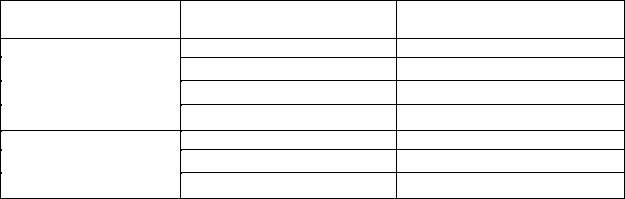
to interpret the character of the writer, to determine the authorship of the document, to study handwriting, to determine the genuineness of the document, to analyze handwriting, to compare handwriting, to break handwriting down into a series of strokes, to foretell the future of the writer, to describe writer’s character, to determine what has happened to a document, to reveal the past of the writer, to determine when a document was produced.

COMMON THINGS

DIFFERENT THINGS

FORENSIC

DOCUMENT

EXAMINERS

GRAPHOLOGISTS

317

5. . -

# # .

a) signatures b) seal c) fingerprints d) psychologist e) handwriting analysis f) character traits g) a printout h) to decipher i) a meaningful description

Handwriting as a personal trademark

Handwriting is a very personal and individual trademark of personality. As no two people have exactly the same handwriting, _____1_____ have for hundreds of years been regarded as legally binding on documents of all types. A person's handwriting is his own private trademark or __2____

which cannot be reproduced by any other individual.

This was firmly believed by no less a personality than Sir William Herschel who founded the system of identification through ____3______. He accepted that handwriting revealed character in the same way that fingerprints reveal identity.

Alfred Binet, the renowned _____4_______ who founded the modern method of I.Q. Testing for intelligence was a firm supporter of _____5_____ and confirmed that certain handwriting traits revealed actual ____6_______.

The French psychologist, Pierre Janet (1859-1947) referred to handwriting analysis as a "science of the future" and described handwriting itself as; "an act which leaves _____7_____. It is the film record of the writer's sensibilities."

The "printout" left by handwriting is a description of the individual's character in psychological code. The graphologist, by using scientifically validated graphological techniques in combination with psychological theory is able ____8_____ that code and to translate it into _____9______ of the writer's character.

6. . , ! & -

. -

, , # , ( !. (

, , , ( & #, -

. (+$ , $ ( & -

).

318

DISCOVER WHAT YOUR HANDWRITING SAYS ABOUT YOU.

On blank (unlined) paper please write the paragraph below as you normally would.

Use at least two lines.

Keep the paper in front of you so that you can answer the questions

'Well!' thought Alice to herself, 'after such a fall as this, I shall think nothing of tumbling down stairs! How brave they'll all think me at home! Why, I wouldn't say anything about it, even if I fell off the top of the house!' (Which was very likely true.)

“Alice's adventures in wonderland” Lewis Carroll

1.How would you say your letters slope?

Backward

Straight up and down

Forward

2.Are the letters in your words

Fully connected, with clear breaks between the words?

Partially connected, depending on the letters?

Unconnected, like printing?

3.Between words, do you leave

Wide spaces?

Narrow spaces?

No spaces - words are connected, pen doesn't leave paper?

4.How close together are your lines of writing?

Very far apart

Apart far enough that the letters do not touch

Close enough that the descenders of the top and the ascenders of the bottom overwrite each other.

Note: Ascenders are letters like h and t. Descenders are letters like y and g.

5.What color ink did you choose?

(If you used another color, which of these three would you prefer?)

319

Blue-black

Red

Light Blue

6.How large was your capital I in the sample?

Larger than the other capital letters

Smaller than the other capital letters

7.What do your t bars look like? (The crossbars on your letter t)

They tend to be to the left of the stem of the t

They cross the t more or less in the middle

They tend to be to the right of the stem of the t

8.Does your writing slope

Upward on the page?

Downward on the page?

9.Which takes the most space vertically in a line of your writing?

The ascenders (letters like t and h)

The middle zone (letters like a, e, n)

The descenders (letters like y and g)

10.How much pressure does your writing show?

Fine and spidery?

Firm and even?

Heavy?

Check your answers with the analysis below.

1. Your letters slope,

Backward - indicates that you are shy, hesitant and afraid to show your feelings. Straight up and down - indicates that you are a person with a strong need for contact. Forward - indicates that you are reticent and self-controlled.

2. The letters in your words are,

Fully connected - indicates that you are a social person who likes to talk and meet others.

Partially connected - indicates that you are a shy, idealistic person who does not find it easy to have relationships.

Unconnected - indicates that you are a person who thinks before acting, intelligent and thorough.

3. The spaces between your words are,

Wide - indicates that you are reserved, shy, cautious, and thoughtful. Narrow - indicates that you are a talkative person, maybe even a busybody! No spaces - indicates that you are impatient and self-confident.

320

Источник: https://studfile.net/preview/16694066/
