Материал: Апсе ENVIRONMENTAL PROTECTION 2014
multiplication |
нейтронов |
Коэффициент |
factor |
Neutron |
размножения |
1,5
12% 233U + 88% 232Th
1,4
 12% 233U + 86% 232Th + 2% 231Pa
1,3
1,2
12% 233U + 76% 232Th + 12% 231Pa
1,1
1,0
0 |
5 |
10 |
15 |
20 |
25 |
30 |
FuelВыгораниеburn-up, % тHM.а.
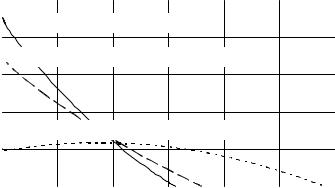
Fig. 6.9. 231Pa effects on fuel burn-up in resonance neutron spectrum
As it follows from Fig. 6.9, introduction of only 12% 231Pa increased fuel burn-up twice. Neutron multiplication factor at the beginning of cycle increased too, i.e. neutron-multiplying properties of fuel composition became better.
Like previous analysis, fraction of main fissile isotope 233U may be increased up to the level corresponding to the situation when neutron
multiplication factor at the beginning of cycle is equal to about 1.10 at full replacement of 232Th by 231Pa. In addition, potential use of 235U in-
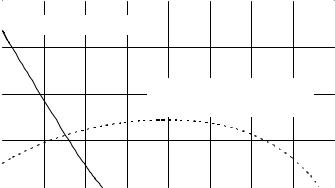
stead of 233U was analyzed to evaluate a possibility for achieving ultrahigh fuel burn-up. So, numerical studies confirmed reasonability for introduction of 231Pa into fuel composition because this introduction results in reduction of initial reactivity margin and in substantial growth of fuel burn-up. Maximal positive effect from introduction of 231Pa may be observed in resonance neutron spectrum. Besides, introduction of 231Pa makes it possible to reach ultra-high fuel burn-up regardless of what main fissile isotope is used, 233U or 235U. In particular, (20% 233U + 80% 231Pa) fuel composition can reach fuel burn-up of 76% HM in resonance neutron spectrum (see Fig. 6.10).
191
multiplication нейтронов |
1,8 |
|
|
|
|
|
|
|
|
|
|
20% 233U + 80% 232Th |
|
|
|
|
|||||
1,6 |
|
|
|
|
|
|
|
|
||
1,4 |
|
|
|
20% 233U + 80% 231Pa |
|
|||||
|
|
|
(30% 235U + 70% 231Pa) |
|
||||||
|
|
|
|
|
||||||
Коэффициент |
factor |
1,2 |
|
|
|
|
|
|
|
|
Neutron размножения |
|
|
|
|
|
|
|
|
||
|
|
|
|
|
|
|
|
|
||
|
|
1 |
|
|
|
|
|
|
|
|
|
|
0 |
10 |
20 |
30 |
40 |
50 |
60 |
70 |
80 |
|
|
|
|
|
FuelВыгораниеburn-up,, % тHM.а. |
|
|
|
||
Fig. 6.10. Achievability of ultra-high fuel burn-up by introducing 231Pa (resonance neutron spectrum)
6.3.7. Effects of 231Pa introduction on reactor safety
On the one hand, introduction of 231Pa into fuel composition can provide small value of initial reactivity margin and high value of fuel burn-up. On the other hand, if relatively large 231Pa fraction is introduced into fuel composition, reactivity feedback on coolant temperature becomes positive, and safety of the reactor operation worsens.
Numerical studies demonstrated that, if maintenance of favorable reactivity feedback on coolant temperature during fuel life-time is a mandatory requirement, then, in thermal neutron spectrum, 231Pa fraction in fuel composition is limited by a quite certain value while, in resonance neutron spectrum, introduction of 231Pa is impossible at all. However, this conclusion is correct only for large-sized reactors, where neutron leakage is negligibly small.
So, only thermal neutron spectra should be considered to provide favorable reactivity feedback on coolant temperature. The results presented in Fig. 6.11 demonstrate a possibility for increasing fuel burn-up in thermal neutron spectrum by introducing 231Pa into fuel composition.
192
|
|
1,4 |
|
|
|
|
|
|
|
multiplication |
размноженияfactorнейтронов |
1,3 |
|
|
|
|
|
|
|
1,2 |
|
|
|
|
7,7% Pa-231 + |
|
|||
|
|
|
|
41% U-235 + |
|
||||
Коэффициент |
|
VVERВВЭР-1000: |
|
|
51,3% U-238 |
|
|||
1,1 |
|
|
|
|
|
||||
|
|
|
|
|
|
|
|||
Neutron |
4,4% U-235 + |
|
|
|
|
||||
|
|
|
|
|
|||||
|
95,6% U-238 |
|
|
|
|
|
|||
|
|
1 |
|
|
|
|
|
|
|
|
|
0 |
5 |
10 |
15 |
20 |
25 |
30 |
35 |
FuelВыгораниеburn-up, % тHM.а.
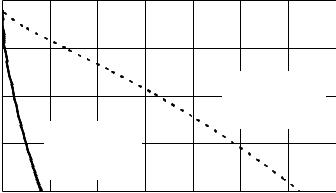
Fig. 6.11. Achievability of ultra-high fuel burn-up by introducing 231Pa with conservation of favorable feedback on coolant temperature (thermal neutron spectrum)
As is known, fuel burn-up in VVER-1000 can reach a value about 4% HM. Introduction of 231Pa and higher contents of 235U can increase fuel burn-up by a factor of 8 with the same initial reactivity margin, i.e. more powerful system of reactivity compensation is not required.
Requirement of favorable reactivity feedback on coolant temperature completely excludes any introduction of 231Pa into fuel composition in the case of large-sized reactors with resonance neutron spectra. However, introduction of 231Pa into fuel composition of small-sized reactors does not worsen safety of the reactor operation because of relatively large neutron leakage. This indicates that the mostly attractive area for 231Pa applications is a small nuclear power including small-sized NPP for remote regions, for the floating NPP, for space stations on the Moon or Mars and for cosmic flights into the outer space.
The following conclusions can be made in respect of potential 231Pa applications:
∙ Application of 231Pa as a burnable neutron poison can reduce initial reactivity margin and increase fuel burn-up.
193
∙Introduction of 231Pa into fuel composition makes it possible to reach ultra-high fuel burn-up (above 30% HM) both in thermal and resonance neutron spectra.
∙The actual problem of 231Pa production in significant amounts should be resolved.
6.4. NM proliferation protection in the closed NFC
NPP operation in open fuel cycle results in accumulation of huge SNF stockpiles that represents a long-term hazard to the humankind. Ultimate SNF disposal is a difficult technical problem requiring large number of practically “eternal” deep underground re positories. That is why many various options for closure of nuclear fuel cycle are currently under research and development including extraction of residual uranium, plutonium and minor actinides from SNF.
As known, the closed uranium-plutonium NFC includes reprocessing and recycling of nuclear fuel and evokes a lot of contradictory opinions with respect to potential risk of plutonium proliferation. This is connected with the following two points:
∙Although plutonium extracted from SNF of power reactors (for example, LWR of PWR, BWR or VVER type) is not the best material for nuclear weapons, nevertheless it can be used in NED of moderate energy yield.
∙Recycled plutonium will be disposed at the facilities of the closed NFC, and this will increase the probability of it using for illegal aims (diversion, theft).
Under these conditions, the absence of any internationally coordinated plan concerning the utilization or ultimate SNF disposal enforced the leading nuclear countries to undertake the steps directed to strengthening the nonproliferation regime (the IAEA safeguard system, the EURATOM embargo on the export of SNF reprocessing technologies). However, several countries, the USA, in the first turn, refused from deployment of breeder reactors which are intended for operation in the closed NFC, and deliberately focused at once-through NFC. On the other hand, the social demands for solving excess fissile materials (plutonium, the first of all) problem which have both civil and military origins, stimulated carrying out the research on plutonium utilization in
194
MOX-fuel compositions. At the same time, the studies of advanced NFC protected against uncontrolled proliferation of fissile materials have been initiated.
6.4.1. Radiation protection of MOX-fuel, initiative GNEP
Specialists from Oak Ridge National Laboratory (USA) have investigated the ways for introduction of γ-radiation sources into fresh fuel compositions. Sixty-four γ-active radionuclides were selected and studied as candidates for admixing into fresh fuel compositions. Radionuclides 137Cs (T1/2 = 30 years) and 60Co (T1/2 = 5.27 years) appeared the most preferable candidates. But cesium is a volatile element, and it can be easily removed from fuel by heating up. Intensity of γ-radiation emitted by 60Co rapidly relaxes.
Specialists from Los Alamos National Laboratory (USA) have proposed the advanced version of the international NFC that enhances proliferation resistance of plutonium. This proposal constituted a basis for the US President’s initiative on the Global Nuclear Energy Partnership (GNEP) that was supported by many countries (including Russia) with well-developed nuclear infrastructure. According to this proposal, spent fuel assemblies discharged from power reactors of a country-user must be transported to the Nuclear Club countries for full-scale reprocessing. The extracted plutonium and minor actinides must be incinerated in the reactors placed on the territory of the International nuclear technology centers. Plutonium is not recycled in power reactors of a country-user. The Nuclear Club countries provide fresh LEU fuel deliveries into a country-user.
Upon exhaustion of rich and cheap uranium resources, nuclear power has to use artificial kinds of fresh fuel (plutonium, 233U or their mixtures). The GNEP initiative does not consider this opportunity. It is proposed to use such power reactors which are able to work without refueling for 15-20 years. After this time interval they must be returned to the Nuclear Club countries for SNF discharging, reprocessing and recharging with fresh fuel.
The concentrated incineration of plutonium and minor actinides in the International nuclear technology centers can lead to unacceptably large local release of thermal energy followed by the unpredictable
195